

Platform Comparison
D3 Morpheus AI vs. Swimlane
Why Low-Code SOAR Isn’t Enough. Compare the AI SOC Platform (Morpheus) against analyst-authored automation. One engine. One trail. No fleet of agents.

See Morpheus AI Investigate Your Alerts
Executive Summary
Choose Morpheus if you need autonomous alert investigation and accountable response without a low-code playbook factory underneath it. D3 Morpheus AI is an AI SOC Platform that delivers autonomous alert investigation and accountable response on one reasoning engine, with one audit trail across every tool in the stack. Swimlane Turbine is a low-code SOAR in which analysts author and maintain workflow templates inside the Turbine Canvas, with Hero AI accelerating the template-authoring step on a general-purpose Mistral 3.1 foundation.
The critical difference: Morpheus AI investigates up to 95% of alerts at L2+ depth in under two minutes, generates playbooks from live evidence at runtime, runs across 800+ Self-Healing Integrations, and executes the four autonomy tiers under one audit trail. Swimlane runs the playbooks an analyst has already designed and asks the analyst to keep the integrations and the playbook library current.
Why Low-Code SOAR Isn’t Enough
Low-code automation looks attractive on a slide. In production, the SOC pays for it every week. Swimlane Turbine improves on classical SOAR by letting analysts compose workflows visually in the Turbine Canvas, but the underlying model is the same: pre-designed playbooks, brittle integrations, and a static library that cannot keep up with the alert stream.
- Brittle integrations: Swimlane’s infinite marketplace promises connectors on demand, but drift handling and ongoing engineering effort still fall on the customer. The industry average to detect and repair a broken connector is 48 hours.
- Analyst-author burden: Hero AI accelerates template generation inside the Turbine Canvas, but a person still has to author, validate, version, and maintain every playbook before it runs in production.
- Static library ceiling: Industry data shows static playbook libraries plateau at 30 to 40% of alert types. The remaining 60 to 70% require investigation that Swimlane is not designed to perform.
- No investigation engine: Swimlane Turbine does not investigate alerts autonomously and does not perform Attack Path Discovery. Hero AI generates playbook templates; it does not reason about attack chains.
- Developer dependency: Maintaining Turbine Canvas playbooks at scale requires developer expertise, not just security expertise. SOC teams without dedicated automation engineers stall.
- General-purpose AI underneath: Hero AI runs on Mistral 3.1, a general-purpose foundation model. It is tuned for template generation, not for SOC reasoning, attack-path correlation, or evidence-graded autonomy.
Morpheus solves all of this. Investigation, Contextual Playbook Generation, and Self-Healing Integrations are built into the same AI SOC Platform, so alerts flow from ingestion to accountable response on one reasoning engine, with one audit trail, no analyst-authored playbook library, and no developer-maintenance treadmill.
Morpheus AI Capabilities Swimlane Cannot Match
The following six capabilities are core to Morpheus AI’s architecture. Swimlane Turbine, as a low-code SOAR built around analyst-authored playbooks, is not designed to deliver them.
Self-Healing Integrations
800+ pre-built integrations that detect API drift in minutes versus the 48-hour industry average. Corrective code is auto-generated without analyst intervention. Swimlane’s infinite marketplace model still asks the SOC to maintain the connector estate over time.
Contextual Playbook Generation
Morpheus AI generates playbooks at runtime from live evidence on the alert. Each playbook is specific to the attack, the customer’s environment, and available tools. Swimlane Hero AI generates templates that analysts then refine and maintain inside the Turbine Canvas; the library is static once published.
Attack Path Discovery (Every Alert)
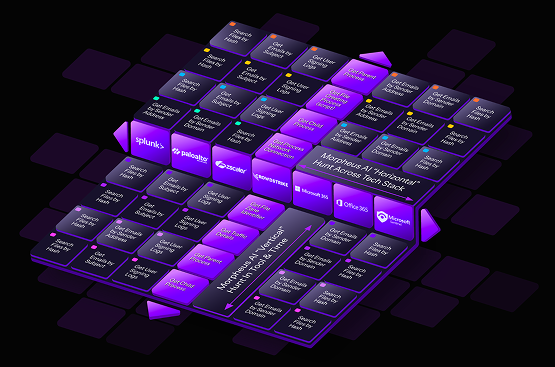
Morpheus AI maps North-South (external-to-critical) and East-West (lateral) attack paths on every alert, using MITRE ATT&CK references to categorize adversary tactics and techniques across up to 90 days of historical telemetry. Swimlane does not perform attack path discovery.
Autonomous Investigation
Morpheus AI investigates up to 95% of alerts at L2+ analyst depth in under two minutes, before an analyst opens the case. Swimlane executes pre-defined playbooks; it does not investigate threats independently or close the gap on alerts outside the authored library.
Cybersecurity Triage Reasoning Graph
Purpose-built reasoning system, 24 months and 60 cybersecurity specialists in the build. The graph is the moat; the LLM underneath is interchangeable. Every autonomous decision produces evidence trees, logic chains, and confidence scores. Swimlane Hero AI runs on Mistral 3.1, a general-purpose foundation model focused on template generation.
Four Autonomy Tiers
Tier 1 Deterministic (classical SOAR), Tier 2 AI-Assisted, Tier 3 AI-Led, Tier 4 Autonomous. One engine. One audit trail. Per-action approval gates calibrated to command-risk policy and confidence scores. See d3security.com/morpheus/autonomy-modes/. Swimlane offers pre-defined workflow execution only.
Feature Comparison: Morpheus vs. Swimlane
Morpheus AI is an AI SOC Platform. Swimlane Turbine is a low-code SOAR built around analyst-authored playbooks. The table below shows what you get in each.
| Capability | D3 Morpheus AI | Swimlane |
|---|---|---|
| Alert Investigation | Up to 95% in <2 min (L2+ quality) | Not available. Hero AI generates templates. |
| Attack Path Discovery (N-S + E-W) | Every alert | N/A |
| Contextual Playbook Generation | Runtime from live evidence | Hero AI templates + Turbine Canvas (static library) |
| Orchestration & Remediation Engine | Built-in (800+ tools) | Workflow execution; depends on authored playbooks |
| Triage component | Cybersecurity Triage Reasoning Graph (24 months / 60 specialists) | Hero AI on Mistral 3.1 (general-purpose) |
| Autonomous Self-Healing | Verify & retry | Manual maintenance required |
| Integrated Tool Ecosystem | 800+ self-healing integrations | Infinite marketplace, customer-maintained |
| Autonomy Spectrum | Four tiers, one engine, one audit trail | Pre-defined workflow execution only |
| Governance & Explainability | Evidence trees, logic chains, confidence scores — supports GDPR, EU AI Act, NIS2, SEC, CISA | Hero AI governance not disclosed |
| MTTR (Mean Time to Remediation) | 80% reduction | Dependent on playbook coverage |
| Single-Vendor Solution | Investigation + Orchestration + Remediation | Workflow automation; investigation not included |
| Pricing Model | Platform Subscription + User Licenses | Custom subscription, not publicly disclosed |
Request your free Swimlane cost comparison
WHY MORPHEUS
Why SOC Teams Choose Morpheus AI

Complete Platform, No Fragmentation
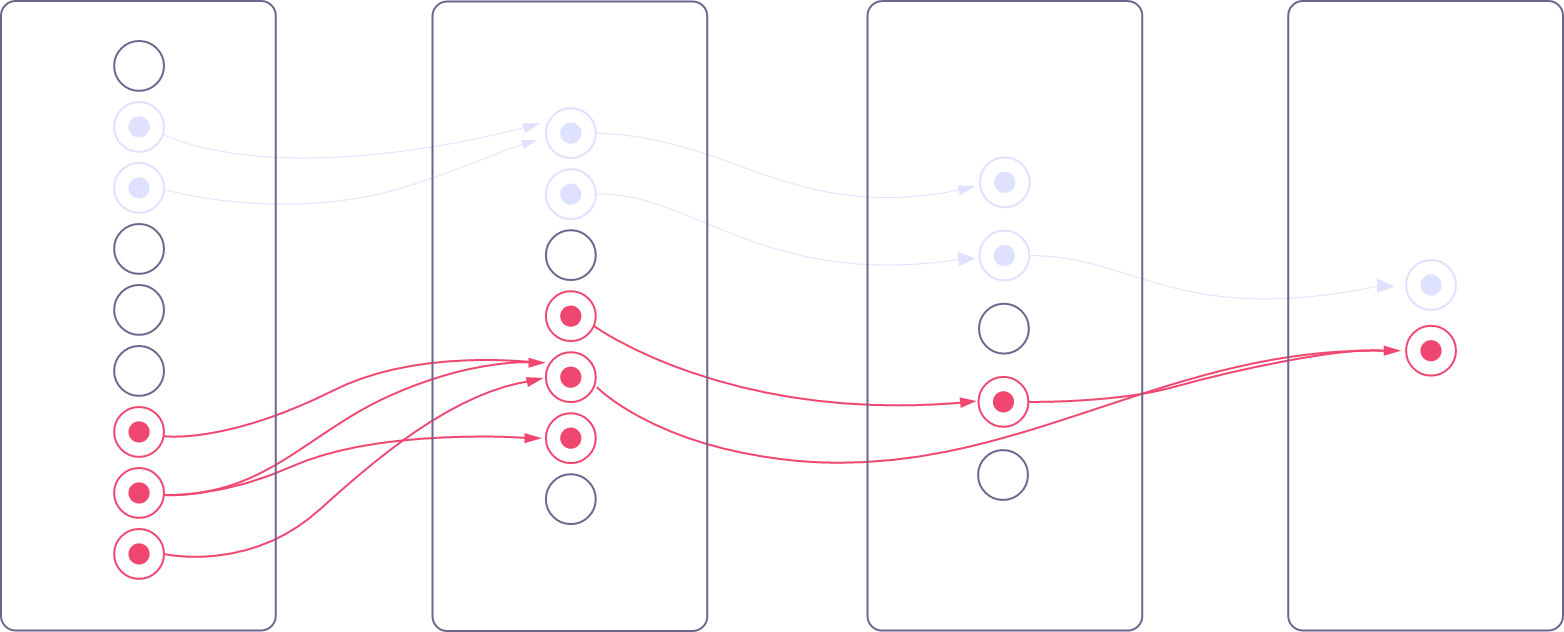
One vendor, one API, one training program. Investigation feeds Contextual Playbook Generation feeds orchestration on a single AI SOC Platform. No analyst-authored playbook library to maintain, no integration glue to manage, no vendor finger-pointing when something breaks.
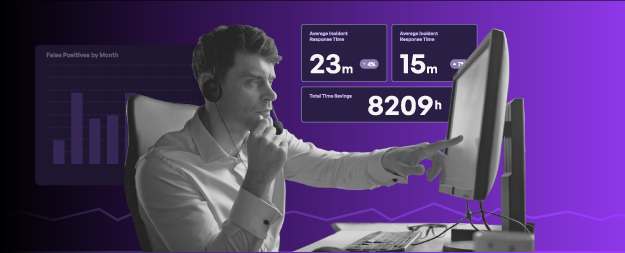
80% Faster Remediation
Attacks are stopped in minutes, not hours. Contextual Playbook Generation runs against live evidence and executes through 800+ Self-Healing Integrations on one reasoning engine, so adversaries do not get a second shot.

7,800 Analyst Hours Saved Annually
Per 1,000 alerts, Morpheus AI eliminates the busywork of triage, playbook authoring, orchestration planning, and post-incident forensics. Analysts focus on strategic threats instead of feeding the Turbine Canvas.
99% False Positive Elimination
Morpheus AI’s contextual investigation cuts false positives to 1%. Analysts investigate actual attacks and escalate with context, not hunches, and do not waste cycles on noise that the Turbine Canvas would simply route somewhere else.

Lower Total Cost of Ownership
Morpheus AI uses a subscription pricing model. The customer pays a Platform Subscription plus User Licenses that together form the Expected Cost of running an AI SOC. The model is designed to absorb the operational cost of token consumption and AI compute internally rather than passing it through as a usage meter. By contrast, Swimlane uses custom subscription pricing that is not publicly disclosed, and the TCO over time is shaped by the developer effort required to author and maintain Turbine Canvas playbooks and to keep the connector estate from drifting. One platform, one budget line. Visit d3security.com/morpheus/pricing/ for details.

Bounded Reasoning, Customer-Extensible
Morpheus AI runs bounded reasoning inside deterministic governance: the Cybersecurity Triage Reasoning Graph holds the SOC logic, and your organization can extend it for your threats, your tools, your playbooks. Swimlane’s Hero AI is constrained by a general-purpose Mistral 3.1 foundation focused on template generation; the SOC ends up extending it by writing more Turbine Canvas workflows by hand.
Morpheus Performance Metrics at a Glance
Real-world data from live Morpheus deployments:
Frequently Asked Questions
Can Swimlane Turbine be extended to match Morpheus AI?
Not without rebuilding the architecture. Swimlane Turbine is a low-code SOAR designed for analysts to author and maintain playbook templates in the Turbine Canvas. Hero AI accelerates template authoring, but the platform still executes what an analyst has already designed. Morpheus AI is an AI SOC Platform that investigates alerts autonomously with the Cybersecurity Triage Reasoning Graph, generates playbooks at runtime from live evidence, and runs across 800+ Self-Healing Integrations on one reasoning engine and one audit trail. You would need to add an investigation engine, attack-path analysis, runtime playbook generation, and a self-healing integration layer on top of Swimlane to approach the same outcome.
What makes the Cybersecurity Triage Reasoning Graph different from Hero AI on Mistral 3.1?
The Cybersecurity Triage Reasoning Graph is a purpose-built reasoning system, 24 months and 60 cybersecurity specialists in the build. The graph is the moat; the LLM underneath is interchangeable. It maps every alert through deterministic logic chains and produces evidence trees and confidence scores for every action. Swimlane Hero AI is built on Mistral 3.1, a general-purpose foundation model, and is focused on generating workflow templates inside the Turbine Canvas rather than investigating threats. Different artifact, different job.
What is contextual playbook generation, and does Swimlane Turbine have it?
No. Swimlane Hero AI generates playbook templates that an analyst then refines and maintains inside the Turbine Canvas. The library is static once published, and industry data shows static playbook libraries plateau at 30 to 40% alert coverage. Morpheus AI generates playbooks at runtime from the live evidence on each alert, so every response is specific to the attack, the customer’s environment, and the available tools. No static library, no developer maintenance cycle, no playbook gap.
How does Morpheus AI handle integration drift compared to Swimlane?
Morpheus AI runs 800+ Self-Healing Integrations that detect API drift in minutes and auto-generate corrective code without analyst intervention. The industry average for catching and fixing a broken connector is 48 hours. Swimlane’s infinite marketplace model promises that Swimlane will build connectors on demand, but maintenance, drift handling, and ongoing engineering work fall back on the customer.
How does Morpheus AI pricing compare to Swimlane?
Morpheus AI uses a subscription pricing model, a Platform Subscription plus User Licenses that together form the customer’s Expected Cost. The model is designed to absorb the operational cost of token consumption and AI compute internally rather than passing it through as a usage meter. Swimlane uses custom subscription pricing that is not publicly disclosed and couples to workflow execution and developer maintenance over time. See d3security.com/morpheus/pricing/ for details.
How does Morpheus AI handle regulatory reporting and audit requirements?
Morpheus AI produces documentation for every autonomous decision: evidence trees, logic chains, and confidence scores. The artifacts support audit and reporting requirements under GDPR, EU AI Act, NIS2, SEC, and CISA. Every AI action is traceable and every decision is explainable. D3 Security is SOC 2 Type II certified.
Ready to See Morpheus in Action?
Swimlane is an excellent low-code automation builder. But low-code automation alone isn’t enough to stop modern attacks. See how Morpheus AI delivers autonomous alert investigation and accountable response, with Contextual Playbook Generation and Self-Healing Integrations across 800+ tools, in under two minutes per alert.
About D3 Security
D3 Security is the maker of Morpheus AI, the AI SOC Platform that combines autonomous investigation, orchestration, and remediation on one reasoning engine with one audit trail across every tool in the stack. Founded in 2015, D3 is trusted by Fortune 500 enterprises, government agencies, and leading financial institutions.
Learn more: www.d3security.com
D3 Security is not affiliated with Swimlane. All trademarks are the property of their respective owners. This comparison reflects publicly available information and our team’s evaluation as of May 2026.