

Platform Comparison
D3 Morpheus AI vs. Qevlar
Why Alert Triage Alone Isn’t Enough. Compare the AI SOC Platform (Morpheus) against AI-native triage tools. One engine. One trail. No fleet of agents.

See Morpheus AI Investigate Your Alerts
Executive Summary
Choose Morpheus if you need autonomous alert investigation and accountable response on one platform. D3 Morpheus AI is an AI SOC Platform that delivers autonomous alert investigation and accountable response on one reasoning engine, with one audit trail across every tool in the stack. Qevlar is an AI-native alert triage tool. It enriches alerts and delivers verdicts. Response still requires a separate SOAR platform and manual orchestration.
The critical difference: Morpheus triages up to 95% of alerts at L2+ depth in under 2 minutes, generates playbooks from live evidence, runs across 800+ integrated tools, and executes the four autonomy tiers under one audit trail. Qevlar produces a triage verdict. Someone else must orchestrate and remediate.
Why Alert Triage Alone Isn’t Enough
Alert triage is the start of the work, not the end. After Qevlar delivers a verdict on an alert, your team still faces critical gaps:
- No built-in orchestration: Qevlar cannot execute response actions. You need a separate SOAR platform to act on its verdicts.
- No playbook generation: Qevlar produces verdicts, not response plans. Analysts must read the verdict and decide what to do next, or hand off to pre-built SOAR playbooks.
- Fragmented ecosystems: Qevlar plus a SOAR platform plus integration glue equals three or more vendors, three training cycles, and three times the maintenance burden.
- Slower remediation: Every alert that needs action requires human routing into the SOAR platform. Delays compound across the SOC.
- Visibility gaps: Qevlar triages the alert in front of it. It does not trace lateral movement or east-west attacks hidden across infrastructure.
- Commercial-LLM dependency: Qevlar wraps a general-purpose model with prompt engineering. Morpheus runs on the Cybersecurity Triage Reasoning Graph, built over 24 months by 60 security specialists. The graph is the moat. The LLM is interchangeable.
Morpheus solves all of this. Investigation, orchestration, remediation, and verification are built into the same platform. Alerts flow from discovery to resolution in under 2 minutes, with no manual handoffs and no separate SOAR license.
Morpheus AI Capabilities Qevlar Cannot Match
The following six capabilities are core to Morpheus’s architecture. Qevlar’s AI-native triage scope is not designed to deliver them.
Attack Path Discovery (Every Alert)
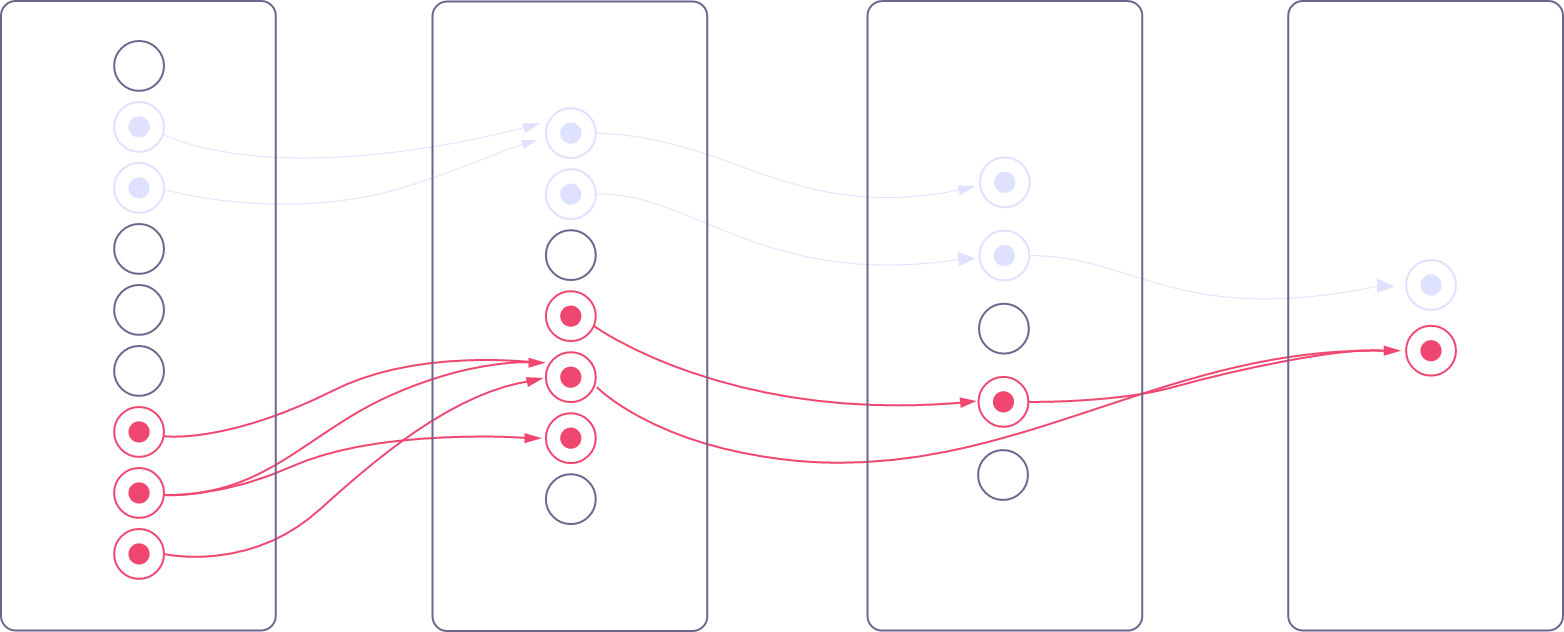
Morpheus maps N-S (external-to-critical) and E-W (lateral) attack paths on every alert, in real time, using MITRE ATT&CK framework references to identify and categorize adversary tactics and techniques. This reveals not just what happened, but what adversaries could do next. Qevlar triages the alert in front of it; it does not discover hidden attack chains across the stack.
Contextual Playbook Generation
Morpheus generates playbooks from live evidence at runtime, with no waiting for SOC engineers to author them. Each playbook is specific to the attack, the customer’s environment, and the available tools. Qevlar delivers a verdict; the human must decide what to do next.
Unified Orchestration & Remediation
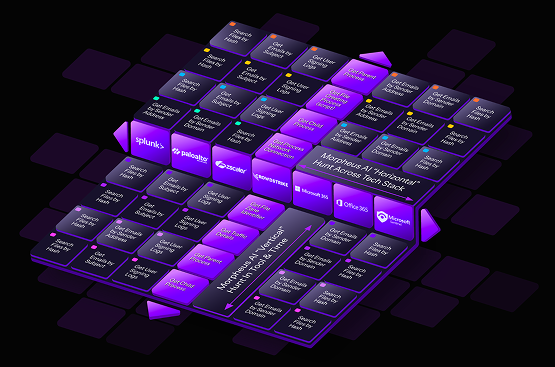
800+ integrated tools, no separate SOAR platform needed. Morpheus orchestrates containment, isolation, and remediation end to end. Qevlar verdicts still require a SOAR handoff to execute response.
Autonomous Self-Healing
After remediation, Morpheus verifies the fix worked. If not, it re-executes automatically. This closed-loop approach delivers 80% MTTR improvement and prevents adversaries from bouncing back. Qevlar stops at the triage verdict.
Cybersecurity Triage Reasoning Graph
24 months of development, 60 security specialists, customer-extensible. The Cybersecurity Triage Reasoning Graph encodes attack progression, tool syntax, playbook logic, and escalation criteria as a graph the platform reasons over. The graph is the moat. The LLM is interchangeable. Qevlar wraps a commercial LLM with prompt engineering.
Four Autonomy Tiers
Morpheus runs across Tier 1 Deterministic, Tier 2 AI-Assisted, Tier 3 AI-Led, and Tier 4 Autonomous, with per-action approval gates and one audit trail. Regulated buyers get credible autonomy, not reckless autonomy. See d3security.com/morpheus/autonomy-modes/. Qevlar operates in a single triage mode.
Feature Comparison: Morpheus vs. Qevlar
Morpheus is the complete AI SOC Platform. Qevlar is an AI-native alert triage tool. The table below shows what you get in each.
| Capability | D3 Morpheus AI | Qevlar |
|---|---|---|
| Alert Investigation | Up to 95% in <2 min (L2+ quality) | AI-native triage verdicts |
| Attack Path Discovery (N-S + E-W) | Every alert | Not available |
| Contextual Playbook Generation | Runtime from live evidence | Not available |
| Orchestration & Remediation Engine | Built-in (800+ tools) | Requires 3rd-party SOAR |
| Triage component | Cybersecurity Triage Reasoning Graph (24 months / 60 specialists) | Commercial-LLM wrapper with prompt engineering |
| Autonomous Self-Healing | Verify & retry | Not available |
| Integrated Tool Ecosystem | 800+ self-healing integrations | Core security tools via API; orchestration via external SOAR |
| Autonomy Spectrum | Four tiers, one engine, one audit trail | Single triage mode |
| Governance & Explainability | Evidence trees, logic chains, confidence scores — supports GDPR, EU AI Act, NIS2, SEC, CISA | Verdict rationale; multi-system audit trail not provided |
| MTTR (Mean Time to Remediation) | 80% reduction | Depends on downstream SOAR |
| Single-Vendor Solution | Investigation + Orchestration + Remediation | Triage only |
| Pricing Model | Platform Subscription + User Licenses | Annual fee tied to investigation volume; requires separate SOAR platform |
Request your free Qevlar cost comparison
WHY MORPHEUS
Why SOC Teams Choose Morpheus AI

Complete Platform, No Fragmentation
One vendor, one API, one training program. No integration glue. No vendor finger-pointing when something breaks. Investigation feeds orchestration. Orchestration feeds remediation. Simple.
80% Faster Remediation
Attacks are stopped in minutes, not hours. Playbooks are generated from live evidence and executed through 800+ integrated tools without manual handoffs, so adversaries do not get a second shot.

7,800 Analyst Hours Saved Annually
Per 1,000 alerts, Morpheus eliminates the busywork of triage, playbook writing, orchestration planning, and post-incident forensics. Analysts focus on strategic threats, not alert fatigue.
99% False Positive Elimination
Morpheus’s contextual investigation cuts false positives to 1%. No more investigating non-threats. Analysts investigate actual attacks and escalate with context, not hunches.

Lower Total Cost of Ownership
Morpheus uses a subscription pricing model. The customer pays a Platform Subscription plus User Licenses that together form the Expected Cost of running an AI SOC. The model is designed to absorb the operational cost of token consumption and AI compute internally rather than passing it through as a usage meter. By contrast, Qevlar’s annual fee is tied to investigation volume, so the commitment must be sized to peak alert activity, and you still need a separate SOAR platform to act on the verdicts. One platform, one budget line. Visit d3security.com/morpheus/pricing/ for details.

Bounded Reasoning, Customer-Extensible
Morpheus is customer-extensible. Your organization can extend the Cybersecurity Triage Reasoning Graph with your own threats, your own tools, and your own playbooks. Reasoning runs inside deterministic governance, so analysts review and approve, and every action lands in one audit trail. Qevlar does not offer this level of extensibility.
Morpheus Performance Metrics at a Glance
Real-world data from live Morpheus deployments:
Frequently Asked Questions
Can Qevlar be paired with a SOAR platform to match Morpheus?
Technically yes, but it creates significant overhead. You would need to license Qevlar, license a separate SOAR (Splunk SOAR, Cortex XSOAR, Tines, etc.), build custom integrations between them, train your team on both platforms, and maintain two separate tools. Even after that, triage and orchestration remain separate systems with separate audit trails. Morpheus unifies investigation, orchestration, and remediation on one reasoning engine, with one audit trail. The result is faster remediation, lower total cost, and fewer integration breakpoints.
What makes the Cybersecurity Triage Reasoning Graph different from a commercial-LLM wrapper?
The Cybersecurity Triage Reasoning Graph was purpose-built for SOC reasoning over 24 months by 60 security specialists. It encodes attack progression, tool integration syntax, context-aware playbook logic, and incident escalation criteria as a graph the platform reasons over. Commercial-LLM wrappers route prompts to a general-purpose model through prompt engineering. The graph is the moat. The LLM is interchangeable. That distinction is why Morpheus produces L2+ investigation depth on every alert and Qevlar produces alert-triage verdicts.
What is contextual playbook generation, and does Qevlar have it?
No. Qevlar produces triage verdicts and investigation summaries. It does not generate response playbooks. Any remediation requires manual analyst action or a separate SOAR platform. Morpheus generates playbooks at runtime from live evidence, so each response is tailored to the specific attack, the customer’s environment, and the available tools. No waiting, no guesswork, no stale templates.
How does Morpheus discover east-west attacks that Qevlar misses?
Qevlar focuses on alert-level triage. Morpheus maps attack paths across the entire infrastructure: external-to-critical (N-S) and lateral movement (E-W). On every alert, Morpheus asks: what else could this attacker do, and where else could they move? That reveals hidden breach chains, privilege-escalation paths, and exfiltration routes a single-alert triage cannot see. The difference is critical for lateral movement in cloud environments and multi-stage attacks.
How does Morpheus pricing compare to Qevlar?
Morpheus AI uses a subscription pricing model: a Platform Subscription plus User Licenses that together form the customer’s Expected Cost. The model is designed to absorb the operational cost of token consumption and AI compute internally rather than passing it through as a usage meter. Qevlar’s pricing scales with annual investigation volume, so the yearly fee must be sized to peak alert activity. Qevlar also requires a separate SOAR platform to execute response, adding a second license and integration project. See d3security.com/morpheus/pricing/ for details.
Is Morpheus governance and explainability suitable for regulated industries?
Morpheus AI produces documentation for every autonomous decision: evidence trees, logic chains, and confidence scores. The artifacts support audit and reporting requirements under GDPR, EU AI Act, NIS2, SEC, and CISA. Every AI action is traceable and every decision is explainable. D3 Security is SOC 2 Type II certified.
Ready to See Morpheus in Action?
Qevlar is an excellent AI-native triage tool. But triage alone is not enough to stop modern attacks. See how Morpheus delivers investigation, orchestration, and remediation in under 2 minutes per alert.
About D3 Security
D3 Security is the maker of Morpheus AI, the AI SOC Platform that combines autonomous investigation, orchestration, and remediation on one reasoning engine, with one audit trail across every tool in the stack. Founded in 2015, D3 is trusted by Fortune 500 enterprises, government agencies, and leading financial institutions.
Learn more: www.d3security.com
D3 Security is not affiliated with Qevlar. All trademarks are the property of their respective owners. This comparison reflects publicly available information and our team’s evaluation as of May 2026.