

The next generation of your SOAR doesn’t have to be a re-platform.
Palo Alto calls AgentiX “the next generation of Cortex XSOAR.” Its AI-driven SOC lives in XSIAM, a SIEM replacement. If the vendor’s own roadmap says migration is coming, choose the destination: autonomous SOC and modern SOAR on one engine, across the multi-vendor stack you deliberately built, governed to a standard a regulator can read, migrated in 60 days. Four large XSOAR enterprises already have.

See Morpheus in Action
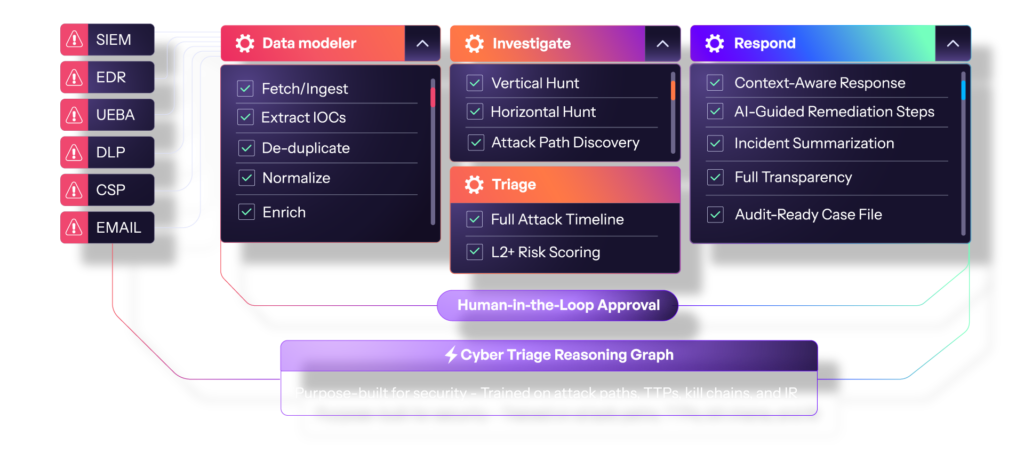
Morpheus AI implements the Unified Intelligence Model architecture: one purpose-built cybersecurity LLM performing complete autonomous investigation within a single reasoning context, producing one unified audit trail per incident. Where playbook flexibility is needed, Morpheus’s Agentic Task nodes run bounded agentic reasoning, autonomous reasoning with explicit iteration, cost, tool-scope, and approval-gate limits, inside the parent workflow’s audit trail. This is architecturally distinct from Cortex XSOAR’s playbook-only approach, which routes work through static decision branches without autonomous reasoning at the node level. For regulated environments under NIS2, DORA, or the EU AI Act, the UIM produces one audit trail per incident, mapping structurally to Article 20 and Article 14 oversight obligations without additional governance tooling.
Why Legacy SOAR Isn’t Enough
Cortex XSOAR is an incident response orchestration platform. It executes pre-defined playbooks against the incidents those playbooks were designed to handle. That model worked when SOAR was new. In a modern enterprise SOC, the architecture leaves critical gaps:
- Authored playbooks plateau: Static playbook libraries cap at roughly 30 to 40% alert-type coverage. The rest stays manual, no matter how large the Cortex marketplace grows.
- Integration packs go stale: 900+ marketplace packs sound impressive until APIs drift. Every drift event becomes a developer ticket, and the break is usually discovered mid-incident.
- SOAR developer tax: Cortex XSOAR deployments need dedicated SOAR architects and engineers, typically in the $150K to $250K compensation band, to author, test, and maintain the playbook inventory at scale.
- Cortex Copilot is an overlay, not an investigator: Copilot helps analysts query data, summarize incidents, and edit playbook logic. It does not autonomously investigate alerts or trace multi-step attack chains across the stack.
- Palo Alto ecosystem gravity: The platform’s center of gravity sits inside Cortex / XSIAM. Every non-Palo Alto tool is an integration the SOAR team carries by hand.
- Roadmap drift: Palo Alto announced AgentiX in October 2025 as the agentic successor to XSOAR. AgentiX is early access, not GA. Today’s investment in authored playbooks sits on a product line in stated successor mode.
Morpheus AI solves all of this. Investigation, orchestration, and remediation run on one reasoning engine. Playbooks are generated at runtime from live evidence. 800+ integrations repair themselves when APIs drift. The platform delivers autonomous alert investigation and accountable response with one audit trail across every tool in the stack.
Cortex XSOAR path forward vs. Morpheus + D3 SOAR
| Capability | Morpheus + D3 SOAR | Cortex XSOAR path forward |
|---|---|---|
| The vendor’s framing | One platform, one roadmap: SOAR and autonomous SOC on the same engine | AgentiX is “the next generation of Cortex XSOAR”¹ |
| AI SOC route | Runs beside the SIEM you keep: Splunk, Sentinel, Elastic, Chronicle | XSIAM: a full SIEM replacement with its own re-platform² |
| Your multi-vendor stack | 800+ self-healing integrations; CrowdStrike, Defender, Proofpoint, Netskope, Purview, and your firewalls all first-class | Bundle incentives pull toward the PA portfolio |
| Migration | 60-day program for typical deployments; playbook translation, parallel run, cutover. Four large XSOAR enterprises converted | Already migrated once (Demisto → XSOAR, 2020³); next move is the vendor’s roadmap |
| Implementation services | Delivered by D3, inside the program | PS SKUs end-of-sale Feb 1, 2026, partner-delivered⁴ |
| Content economics | No points, no expiry, no re-purchase cycle | Marketplace points expire after 5 years⁵ |
| Staffing reality | Self-healing connectors (18-min mean repair vs 4–6-week norm); Reasoning Graph learns from your analysts | “You need someone 100% dedicated to XSOAR in order to get results”⁶ |
| AI governance | Every LLM step boxed in deterministic playbooks, validation gates before/after; command-risk tagging auto-drives approval gates | AgentiX standalone GA early 2026 (v1) |
| Audit trail | One audit trail, identical to a regulator across all four autonomy modes | Two products, two operational models (XSOAR + XSIAM) |
| Compliance mapping | SEC 1.05, NYDFS 500, HIPAA, NERC CIP, NIS2, DORA, EU AI Act Art. 14 | General platform certifications |
| Pricing model | Two platforms, one price: at or under what you pay today | No public list price, negotiated and flexed by portfolio commitments⁷ |
¹ Palo Alto Networks press release, Oct 28, 2025 (vendor-published). ² Vendor positioning, retrieved Jun 11, 2026. ³ Palo Alto Networks press release, Feb 2020: Cortex XSOAR introduction; Demisto customers migrated at GA (vendor-published). ⁴ Vendor end-of-sale page (announced Jul 25, 2025). ⁵ Vendor terms. ⁶ Gartner Peer Insights / PeerSpot reviews, retrieved Jun 11, 2026 (third-party). ⁷ AWS Marketplace listing private-offer only (retrieved Jun 11, 2026).
Morpheus AI Capabilities Cortex XSOAR Cannot Match
The following six capabilities are core to Morpheus AI’s architecture. Cortex XSOAR’s playbook library, Cortex Copilot overlay, and integration marketplace are not designed to deliver them.
Self-Healing Integrations
800+ vendor connections that detect API drift in minutes (versus the 48-hour industry average) and auto-generate corrective code. Cortex XSOAR’s 900+ marketplace packs are maintained by hand: when a vendor ships an API change, the SOAR team rewrites the pack, usually after the break is discovered mid-incident.
Contextual Playbook Generation
Morpheus AI generates bespoke response workflows at runtime from live evidence, tailored to the specific threat, asset, and tool stack. Cortex XSOAR runs analyst-authored playbooks from a static library and asks Cortex Copilot to help write or modify them. Novel threats wait for a new playbook to be authored.
Attack Path Discovery (N–S + E–W)
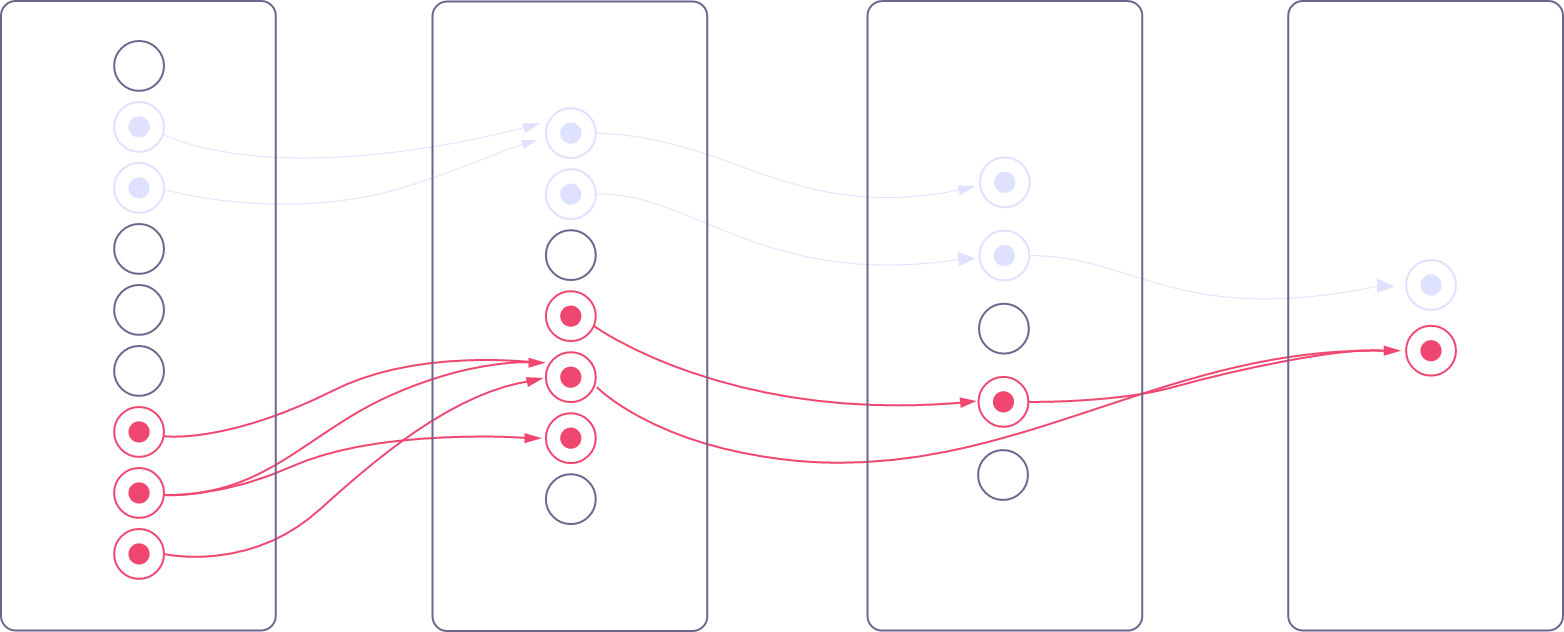
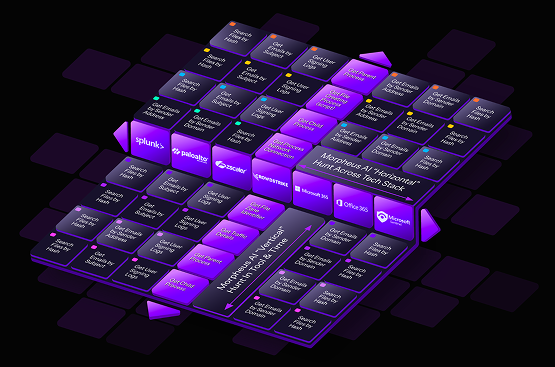
Two-axis investigation on every alert: vertical (N–S) through up to 90 days of historical telemetry, horizontal (E–W) across 800+ tools. Complete attack chains returned at L2+ depth in under two minutes. Cortex XSOAR is limited to the incidents its playbooks were authored for; lateral movement and persistence hunting are analyst-led.
Autonomous Investigation
Morpheus AI investigates up to 95% of alerts at L2+ depth without analyst initiation. Cortex XSOAR executes playbooks triggered by pre-defined conditions; everything outside the playbook inventory falls back to manual analyst work. Cortex Copilot assists; it does not investigate autonomously.
Cybersecurity Triage Reasoning Graph
The purpose-built reasoning system that powers Morpheus AI. 24 months of development by 60 security specialists. The graph is the moat; the underlying model is interchangeable. Every autonomous decision produces evidence trees, logic chains, and confidence scores. Cortex Copilot is an assistive AI overlay on a playbook engine, not a reasoning graph.
Four Autonomy Tiers
Four tiers on one engine, one audit trail: Tier 1 Deterministic (classical SOAR), Tier 2 AI-Assisted (analyst approves every action), Tier 3 AI-Led (Morpheus AI drafts playbooks at runtime, analyst reviews), Tier 4 Autonomous (end-to-end execution gated by command-risk policy and confidence scores). See d3security.com/morpheus/autonomy-modes/.
Feature Comparison: Morpheus vs. Cortex XSOAR
Morpheus AI is the AI SOC Platform. Cortex XSOAR is a playbook-driven SOAR. The table below shows what you get in each.
| Capability | D3 Morpheus AI | Cortex XSOAR |
|---|---|---|
| Alert Investigation | Up to 95% in <2 min (L2+ quality) | Playbook-driven; ~30 to 40% via authored library |
| Attack Path Discovery (N-S + E-W) | Every alert | Not part of the SOAR model |
| Contextual Playbook Generation | Runtime from live evidence | Analyst-authored library; Copilot edits |
| Orchestration & Remediation Engine | Built-in (800+ tools) | Built-in SOAR; Palo Alto-anchored marketplace |
| Triage component | Cybersecurity Triage Reasoning Graph (24 months / 60 specialists) | Cortex Copilot (assistive AI overlay) |
| Autonomous Self-Healing | Verify & retry | Not part of the SOAR model |
| Integrated Tool Ecosystem | 800+ self-healing integrations | 900+ marketplace packs, manually maintained |
| Autonomy Spectrum | Four tiers, one engine, one audit trail | Static playbook execution; AgentiX successor in early access |
| Governance & Explainability | Evidence trees, logic chains, confidence scores — supports GDPR, EU AI Act, NIS2, SEC, CISA | Playbook run logs; reasoning opaque to audit |
| MTTR (Mean Time to Remediation) | 80% reduction | Depends on playbook coverage and analyst staffing |
| Single-Vendor Solution | Investigation + Orchestration + Remediation | Orchestration; investigation depth is analyst-led |
| Pricing Model | Platform Subscription + User Licenses | Enterprise licensing (not publicly disclosed) plus SOAR developer headcount |
The 60-Day Migration
Weeks 1–2: Discovery: playbook inventory, connector map, data-model mapping.
Weeks 3–6: Translation: playbooks onto Morpheus’s deterministic substrate (the operating model your XSOAR engineers already think in), integrations live on self-healing connectors.
Weeks 7–8: Parallel run, validation against historical incidents, cutover with hypercare.
Program scope for typical XSOAR deployments; complex estates scoped in discovery.
Bring us your Cortex XSOAR renewal. See what the open, governed agentic SOC costs on your real number, then walk through the 60-day migration plan.
WHY MORPHEUS
Why SOC Teams Choose Morpheus AI

Complete Platform, No Fragmentation
One vendor, one API, one training program. Investigation feeds directly into orchestration feeds directly into remediation, on one reasoning engine with one audit trail. No integration glue. No vendor finger-pointing when something breaks. No separate SOAR developer team standing between the alert and the response.
80% Faster Remediation
Attacks are stopped in minutes, not hours. Playbooks are generated from live evidence and executed through 800+ self-healing integrations without manual handoffs. Cortex XSOAR’s playbook-driven model bottlenecks on whatever workflows the SOAR team has already authored; Morpheus AI does not wait.

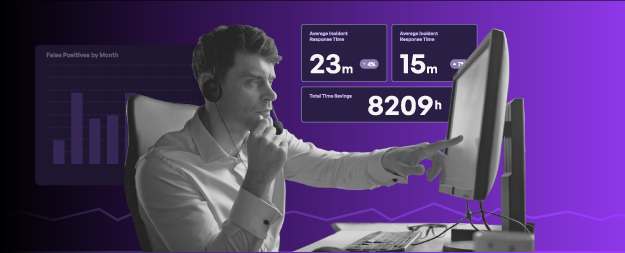
7,800 Analyst Hours Saved Annually
Per 1,000 alerts, Morpheus AI eliminates the busywork of triage, playbook writing, orchestration planning, and post-incident forensics. With XSOAR, those hours stay on the team: SOAR engineers author playbooks, analysts route incidents, and developers maintain integration packs. With Morpheus AI, analysts focus on strategic threats.
99% False Positive Elimination
Morpheus AI’s contextual investigation cuts false positives to 1%. Analysts investigate actual attacks and escalate with full context, not hunches. Cortex XSOAR depends on whatever filtering the upstream detection tools and playbook conditions perform; the noise reduction sits outside the platform.

Lower Total Cost of Ownership
Morpheus AI uses a subscription pricing model. The customer pays a Platform Subscription plus User Licenses that together form the Expected Cost of running an AI SOC. The model is designed to absorb the operational cost of token consumption and AI compute internally rather than passing it through as a usage meter. By contrast, Cortex XSOAR is sold through Palo Alto’s enterprise licensing with pricing that is not publicly disclosed, and the deployment carries the additional cost of dedicated SOAR developer headcount to author and maintain the playbook inventory. One platform, one budget line. Visit d3security.com/morpheus/pricing/ for details.

Bounded Reasoning, Customer-Extensible
The Cybersecurity Triage Reasoning Graph is customer-extensible. Your organization can shape the graph for your threats, your tools, and your SOPs without touching the underlying reasoning model. Cortex XSOAR offers playbook customization through the visual editor and Cortex Copilot, but the reasoning layer itself is not exposed for tuning.
Morpheus Performance Metrics at a Glance
Real-world data from live Morpheus deployments:
Frequently Asked Questions
XSOAR is fully supported. Why move now?
It is, and we won’t tell you otherwise. But sequence the vendor’s own signals: PS SKUs end-of-sale Feb 1, 2026; AgentiX publicly framed as “the next generation of Cortex XSOAR”; the AI SOC delivered via XSIAM, a SIEM re-platform. If you bought Demisto, you’ve been migrated once already, at the vendor’s timing. The real question is whether the next migration happens on your timing, to a destination you chose.
We’ve invested years in XSOAR playbooks. Doesn’t switching torch that?
No. This is exactly what the 60-day program exists to prove. Morpheus runs deterministic, governed playbooks, so migration translates them onto a familiar substrate. Four large XSOAR enterprises have completed the migration. Ask us what their playbook coverage looked like at cutover.
Palo Alto offers us a strong bundle discount. How do you compete with that?
Look at what finances the discount: portfolio commitments. If your stack is deliberately multi-vendor (your SIEM, your EDR, your email security, your DLP, your firewalls), the bundle is asking you to unwind those choices over time. Morpheus’s price doesn’t depend on whose logo is on the rest of your stack. Bring us your renewal; we’ll show you two platforms for it.
Is Morpheus’s autonomy safe enough for our auditors?
Every action auto-tiered by command risk, driving approval gates automatically. Every LLM step between validation gates inside deterministic playbooks. One audit trail identical across all four autonomy modes, mapped to seven frameworks including DORA and EU AI Act Article 14. The Reasoning Graph learns from your analysts’ decisions. It learns; it doesn’t act outside its gates.
Can Cortex XSOAR be paired with another platform to match Morpheus AI?
Technically yes, but the result is more vendors, not fewer. You would license Cortex XSOAR, license an investigation layer to do the autonomous reasoning XSOAR does not perform, build the connective tissue between them, and continue staffing the SOAR developer team that maintains the playbook library. Morpheus AI unifies investigation, orchestration, and remediation on one reasoning engine, with one audit trail across every tool in the stack. The result: faster remediation, lower cost, fewer integration breakpoints.
What makes the Cybersecurity Triage Reasoning Graph different from Cortex Copilot?
Morpheus AI’s Cybersecurity Triage Reasoning Graph was purpose-built for SOC reasoning over 24 months by 60 security specialists. It investigates alerts, traces attack paths, and generates playbooks from live evidence. Cortex Copilot is an assistive AI overlay that helps analysts query data, summarize incidents, and edit XSOAR playbook logic. Copilot does not investigate autonomously or replace the analyst-authored playbook library. Morpheus AI delivers up to 95% of alerts at L2+ depth in under two minutes, autonomously.
Does Cortex XSOAR generate playbooks at runtime the way Morpheus AI does?
No. Cortex XSOAR runs analyst-authored playbooks from a static marketplace library. Cortex Copilot can assist analysts in writing or modifying those playbooks, but the platform does not generate response logic at runtime from live evidence. Morpheus AI generates a bespoke playbook for every investigation, tailored to the specific threat, asset, and tools available, with no library to maintain and no coverage ceiling.
How does Morpheus AI discover attack paths Cortex XSOAR misses?
Cortex XSOAR executes pre-defined playbooks against the incidents those playbooks were designed to handle. Morpheus AI Attack Path Discovery performs simultaneous two-axis investigation on every alert: vertical (North to South) through up to 90 days of historical telemetry, and horizontal (East to West) across 800+ tools. This reveals lateral movement, persistence techniques, and dormant footholds that fall outside the existing playbook inventory. Cortex Copilot can assist an analyst with manual hunting, but it does not perform two-axis Attack Path Discovery autonomously.
How does pricing compare between Morpheus AI and Cortex XSOAR?
Morpheus AI uses a subscription pricing model. A Platform Subscription plus User Licenses together form the customer’s Expected Cost. The model is designed to absorb the operational cost of token consumption and AI compute internally rather than passing it through as a usage meter. Cortex XSOAR is sold through Palo Alto’s enterprise licensing, with pricing that is not publicly disclosed and typically requires custom negotiation. XSOAR deployments also carry the additional cost of dedicated SOAR developer headcount to author and maintain playbooks. See d3security.com/morpheus/pricing/ for details.
What compliance and governance capabilities does Morpheus AI provide?
Morpheus AI produces documentation for every autonomous decision: evidence trees, logic chains, and confidence scores. The artifacts support audit and reporting requirements under GDPR, EU AI Act, NIS2, SEC, and CISA. Every AI action is traceable and every decision is explainable. D3 Security is SOC 2 Type II certified.
D3 Security is not affiliated with Palo Alto Networks. Cortex XSOAR, XSIAM, AgentiX, and Demisto are trademarks of their respective owners. This comparison reflects publicly available information and our team’s evaluation as of June 2026.