

Accountable Agentic SOC
The AI SOC that refuses to bluff
Most AI analysts are built to produce an answer. Morpheus is built to produce the truth, and to say so when it can’t. Autonomous at every stage, governed at every stage.
Watch it return “no answer,” safely.
What is an accountable agentic SOC?
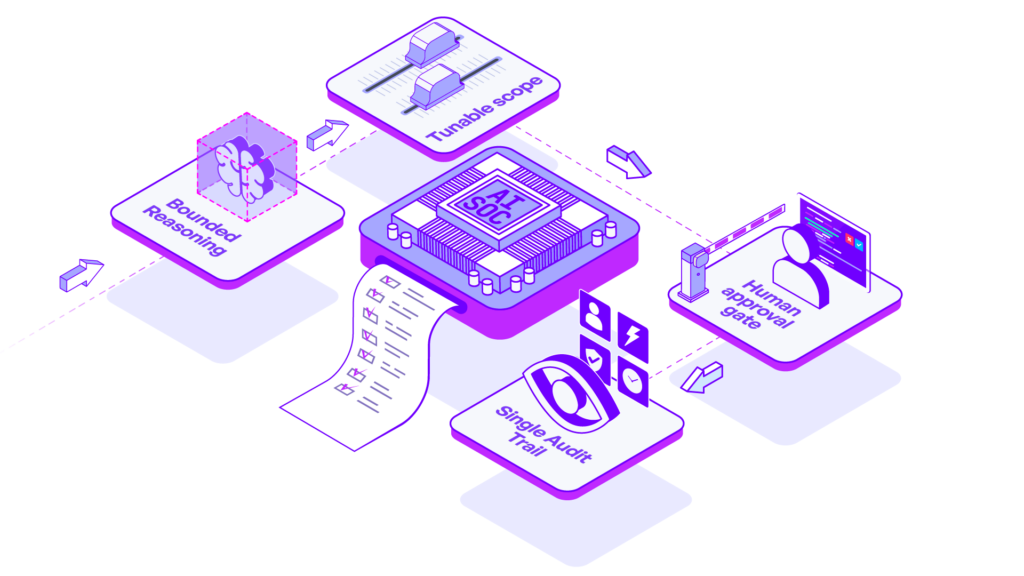
An accountable agentic SOC is one that can act on its own and account for every action, including the decision to stop. Morpheus investigates each alert autonomously, scores and explains it, and contains it within policy. When a source is unreachable or the evidence is incomplete, it does not guess. It fails toward a human, handing off the case untriaged and flagged. The result is autonomy you can delegate, because it never trades a missed breach for the appearance of being finished.
What happens when an AI analyst is wrong?
Most of the risk in an autonomous SOC lives on the bad day, not the good one. An agent built to always return an answer will, under pressure (a tool down, data missing, a novel attack), return a confident wrong one. The most dangerous output in a SOC is a false “benign.” Morpheus is engineered for that moment. Weak or missing evidence never closes an alert.
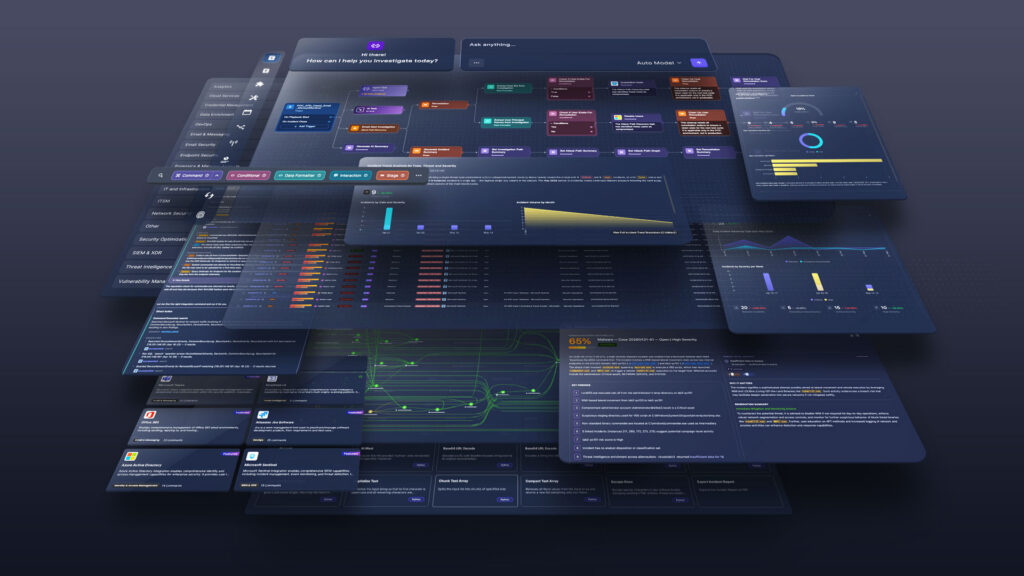
How many alerts does a 1% error rate actually miss?
More than you’d accept if you saw the number. Mis-triaged alerts equal your daily volume times the error rate. Take a Tier 1 agentic SOC vendor at its advertised accuracy and run the math.
| Claimed accuracy | 1,000 alerts/day | 5,000 alerts/day | 10,000 alerts/day |
|---|---|---|---|
| 99.9% | 1 mis-triaged | 5 | 10 |
| 99% (commonly advertised) | 10 | 50 | 100 |
| 95% | 50 | 250 | 500 |
| 90% | 100 | 500 | 1,000 |
Even taking a “99% accurate” claim at face value, a SOC running 10,000 alerts a day mis-handles 100 of them daily, over 36,000 a year. The most dangerous ones are the true attacks closed as benign.
Methodology: figures apply a Tier 1 agentic SOC vendor’s own advertised accuracy, taken at face value, with illustrative lower tiers. The arithmetic is exact: daily alert volume × error rate (1 − accuracy).
The Morpheus difference
Morpheus doesn’t promise a perfect score. It promises something that matters more at scale: uncertainty becomes a flagged hand-off, and the mistakes that would slip through become reviewed cases instead. Below the confidence bar, the alert stays open for a human to judge.
How does Morpheus avoid hallucinated verdicts?
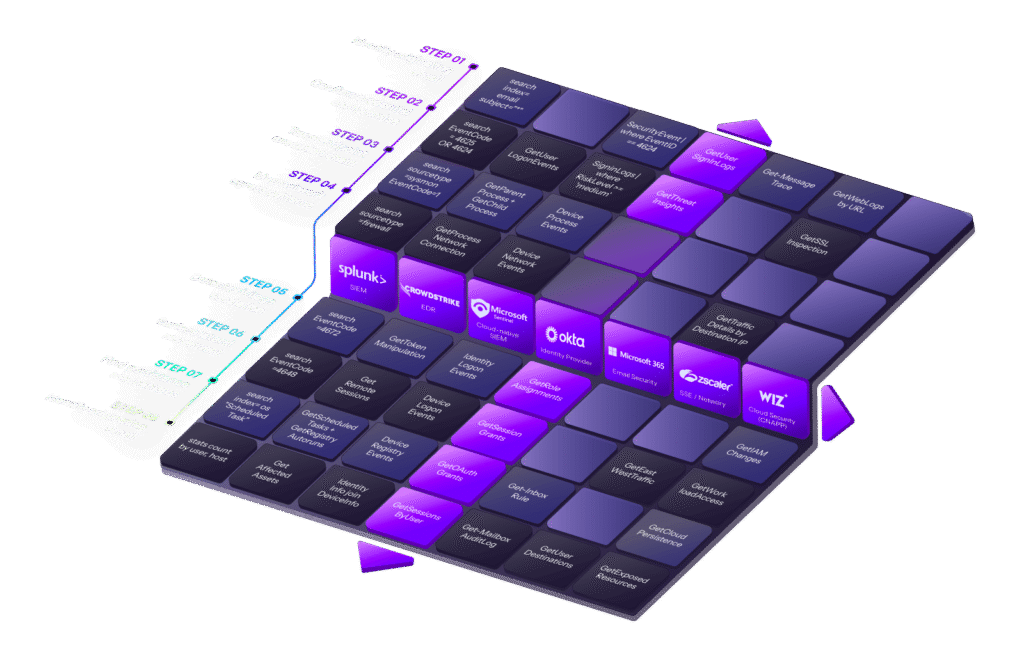
Three design choices, working together
It investigates read-only
The engine gathers evidence and takes no action. A human can read the entire attack path.
It retries against the real error
For anything new, it authors a query and tries the tool a bounded number of times against the tool’s actual response, never a fabricated success.
It fails toward a human
When a real answer isn’t available, it escalates with exactly what it has and what’s missing. It does not auto-close or invent a confirmation.
See it in action
Watch the three guardrails run on one real alert: once with complete evidence, and once when a key source goes dark.
How do I know what it did, and why?
Every alert produces one traceable record: the originating alert, the queries run, the evidence found, the confidence reasoning, and every analyst action. The investigation is the audit trail: one chain of custody mapped to human-oversight obligations like EU AI Act Article 14 and DORA. That record is what makes delegated autonomy defensible.
For MSSPs: does this scale across clients?
Yes. The guardrails matter more at scale, not less. Investigation, learning, and the audit trail are tenant-scoped: no cross-client bleed, a defensible escalation trail per client, and the same “won’t bluff” behavior on every tenant. You hand analysts a scoped starting point, not a guess to unwind.
Related
Go deeper: What happens when an AI analyst is wrong? breaks down the five ways autonomous triage fails and the design that prevents each.
faqs
Frequently Asked Questions
The short answers behind accountable, fail-open autonomy.
What is an accountable agentic SOC?
An AI-driven SOC that can investigate and respond autonomously while accounting for every action, including when it chooses not to act. It is governed at every stage and produces a complete audit trail.
What does ‘fail-open’ mean in a SOC?
It means that when the AI cannot reach a reliable conclusion, it defaults to safety and human review. The case is handed off flagged, and the alert stays open for a person to judge.
Can an AI SOC analyst say ‘I don’t know’?
Most cannot; they are built to return an answer. Morpheus is built to recognize when the evidence is insufficient and escalate, with the gap clearly marked.
Does autonomous response mean the AI acts without approval?
No. Consequential actions are governed by approval gates and risk-tiered controls. A human can override at any stage, and every action is reversible and logged.
See it return “no answer,” safely
See an investigation succeed, and see one stop safely when a source goes dark.