

Platform Comparison
D3 Morpheus AI vs. Google SecOps SOAR
The AI SOC Platform for autonomous alert investigation and accountable response, compared against Siemplify-based SOAR with a Gemini assistant. One engine. One trail. No fleet of agents.

See Morpheus AI Investigate Your Alerts
Executive Summary
Choose Morpheus if you need autonomous alert investigation and accountable response across your entire security stack, not just inside the Google Cloud data layer. D3 Morpheus AI is an AI SOC Platform that delivers autonomous alert investigation and accountable response on one reasoning engine, with one audit trail across every tool in the stack. Google SecOps SOAR is the Siemplify automation engine Google acquired in 2022, layered with a Gemini AI assistant inside the Chronicle data layer.
The critical difference: Morpheus investigates up to 95% of alerts at L2+ depth in under 2 minutes, generates playbooks from live evidence, runs across 800+ self-healing integrations, and executes the four autonomy tiers under one audit trail. Google SecOps SOAR runs static Siemplify playbooks with Gemini summarizing cases and suggesting actions for the analyst.
Why Cloud-Ecosystem SOAR Isn’t Enough
Google SecOps SOAR pairs the Siemplify automation engine with the Gemini AI assistant inside the Chronicle data layer. The combination is productive for analysts already invested in Google Cloud, but the underlying SOAR model carries the same structural gaps as every legacy automation platform:
- Static Siemplify playbook library: Pre-built and analyst-authored playbooks with conditional branching. SOC engineering teams write, tune, and maintain the library. Coverage tends to plateau at 30 to 40 percent of alert types.
- Analyst-initiated Gemini assistance: Gemini summarizes cases, drafts YARA-L rules, and proposes playbook steps, but it responds to prompts rather than investigating autonomously. The analyst still decides what to look for and when to escalate.
- Manual integration maintenance: Roughly 300 connectors with static configuration. When an API drifts, the field renames, or authentication rotates, SOC engineering repairs the connector by hand.
- Chronicle-centric data gravity: Full value of the platform leans on centralizing telemetry on Chronicle. Tools outside Google Cloud reach the platform through connectors that the SOC team maintains.
- No two-axis attack path discovery: Gemini can summarize a case and surface related entities. It does not trace vertical (North-South) through historical telemetry and horizontal (East-West) across the full stack to reconstruct attack chains on every alert.
- Usage-coupled pricing: Tiered packaging combined with credit-based data ingestion. Cost scales with telemetry volume, so ingestion growth and incident-time investigation depth both push the meter.
Morpheus solves all of this. Self-Healing Integrations maintain 800+ connections without manual engineering. Contextual Playbook Generation removes the static library. The Cybersecurity Triage Reasoning Graph investigates every alert end-to-end. Attack Path Discovery traces vertical and horizontal across the full stack in one pass. And the four autonomy tiers run under one audit trail, on any SIEM, including Chronicle.
Morpheus AI Capabilities Google SecOps SOAR Cannot Match
The following six capabilities are core to Morpheus’s architecture. Google SecOps SOAR is not designed to deliver them.
Self-Healing Integrations
Morpheus AI maintains 800+ vendor connections autonomously. When an API changes, a field is renamed, an endpoint is deprecated, or authentication rotates, Morpheus detects the drift in minutes and auto-generates corrective code. Google SecOps SOAR ships roughly 300 static connectors that SOC engineering teams configure and repair by hand.
Contextual Playbook Generation
Morpheus AI generates playbooks at runtime from live evidence, tailored to the specific attack, target asset, and available tools. Google SecOps SOAR ships the Siemplify playbook library that the SOC engineering team authors, tunes, and maintains. Gemini can suggest steps; it does not generate the playbook.
Attack Path Discovery (N-S + E-W)
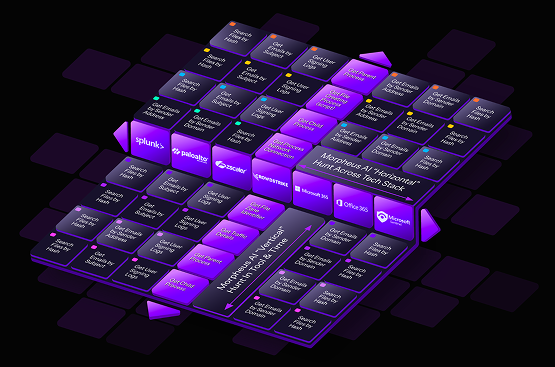
Morpheus AI traces vertical (North to South) through up to 90 days of historical telemetry and horizontal (East to West) across 800+ tools in one pass on every alert. Google SecOps SOAR has no equivalent two-axis hunting. Gemini summarizes the case the analyst opens; it does not reconstruct the full attack chain autonomously.
Autonomous Investigation
Morpheus AI investigates every alert end-to-end before the analyst opens the case. Up to 95% of alerts triaged at L2+ depth in under 2 minutes. Google SecOps SOAR runs analyst-authored playbooks with Gemini responding to analyst prompts. The investigative decisions remain analyst-driven.
Cybersecurity Triage Reasoning Graph
D3’s purpose-built reasoning system, developed over 24 months with 60 security specialists. The graph encodes attack patterns, tool integration syntax, and incident escalation logic. Google SecOps uses Gemini, a general-purpose LLM adapted for security tasks like summarization and YARA-L drafting. The graph is the moat. The LLM is interchangeable.
Four Autonomy Tiers
Morpheus AI runs four autonomy tiers under one audit trail: Tier 1 Deterministic, Tier 2 AI-Assisted, Tier 3 AI-Led, and Tier 4 Autonomous, each with per-action approval gates and confidence scores. Google SecOps SOAR offers Siemplify playbook automation with Gemini approval workflows; it does not expose a tiered autonomy spectrum with command-risk policy gating. See d3security.com/morpheus/autonomy-modes/.
Feature Comparison: Morpheus vs. Google SecOps SOAR
Morpheus is the complete AI SOC Platform. Google SecOps SOAR is the Siemplify automation engine plus a Gemini assistant inside the Chronicle data layer. The table below shows what you get in each.
| Capability | D3 Morpheus AI | Google SecOps SOAR |
|---|---|---|
| Alert Investigation | Up to 95% in <2 min (L2+ quality) | Gemini summarization on analyst-opened cases |
| Attack Path Discovery (N-S + E-W) | Every alert | Not available |
| Contextual Playbook Generation | Runtime from live evidence | Siemplify library, pre-built and analyst-authored |
| Orchestration & Remediation Engine | Built-in (800+ tools) | Siemplify automation with roughly 300 connectors |
| Triage component | Cybersecurity Triage Reasoning Graph (24 months / 60 specialists) | Gemini, general-purpose LLM adapted for security |
| Autonomous Self-Healing | Verify & retry | Manual repair by SOC engineering |
| Integrated Tool Ecosystem | 800+ self-healing integrations | ~300 connectors, Chronicle-centric |
| Autonomy Spectrum | Four tiers, one engine, one audit trail | Siemplify playbook automation with Gemini approvals |
| Governance & Explainability | Evidence trees, logic chains, confidence scores — supports GDPR, EU AI Act, NIS2, SEC, CISA | Audit logs inside Google Cloud security stack |
| MTTR (Mean Time to Remediation) | 80% reduction | Depends on analyst workload and Gemini response time |
| Single-Vendor Solution | Investigation + Orchestration + Remediation | SIEM + SOAR + AI assistant, full value tied to Chronicle |
| Pricing Model | Platform Subscription + User Licenses | Tiered packaging (Standard/Enterprise/Enterprise Plus) plus credit-based data ingestion |
Request your free Google SecOps SOAR cost comparison
WHY MORPHEUS
Why SOC Teams Choose Morpheus AI

Complete Platform, No Fragmentation
One vendor, one API, one training program, one audit trail. Investigation, orchestration, and remediation run on one reasoning engine. No data migration to a single cloud’s data layer, no separate AI assistant license, no SOC engineering team maintaining the Siemplify playbook library. Simple.
80% Faster Remediation
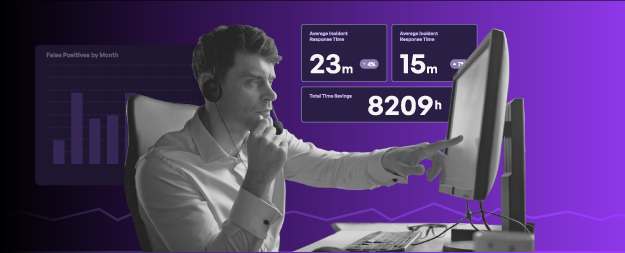
Attacks are stopped in minutes, not hours. Playbooks are generated from live evidence and executed through 800+ self-healing integrations without manual handoffs to a SOAR engineer. Adversaries don’t get a second shot.

7,800 Analyst Hours Saved Annually
Per 1,000 alerts, Morpheus eliminates the busywork of triage, playbook authoring, YARA-L tuning, and post-incident forensics. Analysts focus on strategic threats, not alert fatigue and prompt engineering.
99% False Positive Elimination
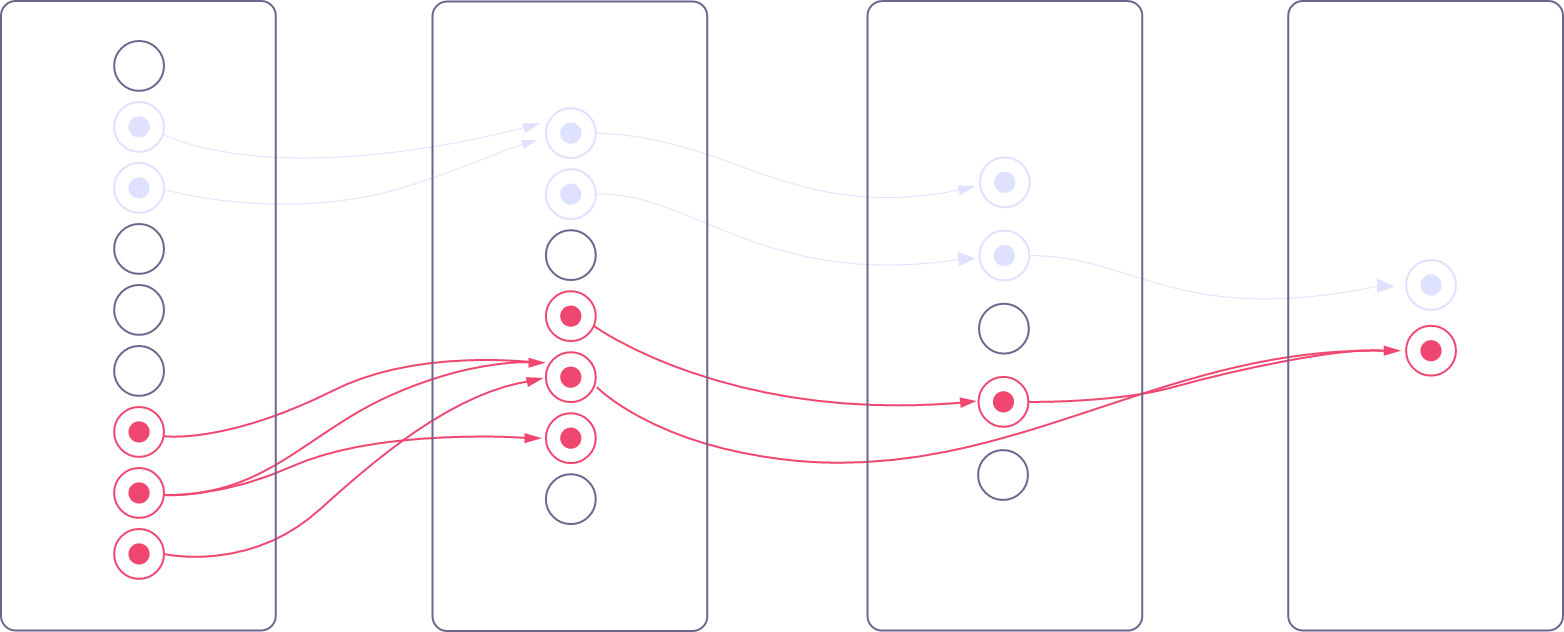
Morpheus’s contextual investigation cuts false positives to 1%. No more chasing non-threats through Gemini summaries and Siemplify playbooks. Analysts investigate actual attacks with full evidence chains and escalate with confidence scores, not hunches.

Lower Total Cost of Ownership
Morpheus uses a subscription pricing model. The customer pays a Platform Subscription plus User Licenses that together form the Expected Cost of running an AI SOC. The model is designed to absorb the operational cost of token consumption and AI compute internally rather than passing it through as a usage meter. By contrast, Google SecOps SOAR’s tiered packaging (Standard, Enterprise, Enterprise Plus) couples to credit-based data ingestion, so cost scales with telemetry volume and incident-time investigation depth, and the full platform value tends to require centralizing data on Chronicle. One platform, one budget line. Visit d3security.com/morpheus/pricing/ for details.
Bounded Reasoning, Customer-Extensible
The Cybersecurity Triage Reasoning Graph is the moat; the reasoning model inside it is interchangeable. Customers can extend the graph with their own threats, tools, and SOPs without rewriting the deterministic framework underneath. Google SecOps SOAR couples its assistant to Gemini inside Google Cloud. Morpheus delivers bounded reasoning inside deterministic governance, on any SIEM, including Chronicle.
Morpheus Performance Metrics at a Glance
Real-world data from live Morpheus deployments:
Frequently Asked Questions
Can Google SecOps SOAR match Morpheus AI’s autonomous investigation?
No. Google SecOps SOAR runs the Siemplify automation engine with Gemini layered on top for natural-language search, case summarization, and analyst-initiated playbook suggestions. Gemini supports the analyst who already knows what to ask. Morpheus AI runs the Cybersecurity Triage Reasoning Graph and investigates every alert autonomously, end-to-end, before the analyst opens the case. Morpheus covers up to 95% of alerts at L2+ depth in under two minutes and produces evidence trees, logic chains, and confidence scores for every decision.
What makes the Cybersecurity Triage Reasoning Graph different from Gemini?
The Cybersecurity Triage Reasoning Graph is D3’s purpose-built reasoning system, developed over 24 months with 60 security specialists. It encodes attack patterns, tool integration syntax, and incident escalation logic that general-purpose models do not carry. Gemini in Google SecOps is a general-purpose LLM adapted for security tasks like case summarization and YARA-L drafting. The graph is the moat. The LLM is interchangeable. Customers can extend the graph with their own threats, tools, and SOPs without rewriting the deterministic framework underneath.
What is runtime playbook generation, and does Google SecOps SOAR do it?
No. Google SecOps SOAR ships the Siemplify playbook library with conditional branching and analyst-authored automations. Gemini can suggest playbook steps and draft YARA-L rules, but the underlying library is static and must be maintained by the SOC engineering team. Morpheus AI generates playbooks at runtime from live evidence, tailored to the specific attack, target asset, organizational SOPs, and available tools. No library to maintain, no coverage ceiling, no drift to repair.
Does Morpheus AI work beside Google Chronicle?
Yes. Morpheus AI is vendor-neutral and runs beside any SIEM, including Google Chronicle. It connects to the data where it already lives across 800+ self-healing integrations and produces one audit trail across every tool, with no requirement to move data onto Google’s data layer. Customers already invested in Chronicle keep Chronicle and extend it with Morpheus AI’s autonomous investigation across the full stack.
How does Morpheus AI pricing compare to Google SecOps?
Morpheus AI uses a subscription pricing model, a Platform Subscription plus User Licenses that together form the customer’s Expected Cost. The model is designed to absorb the operational cost of token consumption and AI compute internally rather than passing it through as a usage meter. Google SecOps uses tiered packaging (Standard, Enterprise, Enterprise Plus) combined with credit-based data ingestion that scales with telemetry volume, so cost couples to ingestion growth and incident-time investigation depth. See d3security.com/morpheus/pricing/ for details.
What compliance and governance capabilities does Morpheus AI provide?
Morpheus AI produces documentation for every autonomous decision: evidence trees, logic chains, and confidence scores. The artifacts support audit and reporting requirements under GDPR, EU AI Act, NIS2, SEC, and CISA. Every AI action is traceable and every decision is explainable. D3 Security is SOC 2 Type II certified.
Ready to See Morpheus in Action?
Google SecOps SOAR is an excellent SOAR engine inside the Google Cloud security stack. But Siemplify automation with a Gemini assistant alone isn’t enough to investigate every alert autonomously across the full stack. See how Morpheus delivers investigation, orchestration, and remediation in under 2 minutes per alert, beside any SIEM, including Chronicle.
About D3 Security
D3 Security is the maker of Morpheus AI, the AI SOC Platform that combines autonomous investigation, orchestration, and remediation on one reasoning engine with one audit trail. Founded in 2015, D3 is trusted by Fortune 500 enterprises, government agencies, and leading financial institutions.
Learn more: www.d3security.com
D3 Security is not affiliated with Google. All trademarks are the property of their respective owners. This comparison reflects publicly available information and our team’s evaluation as of May 2026.