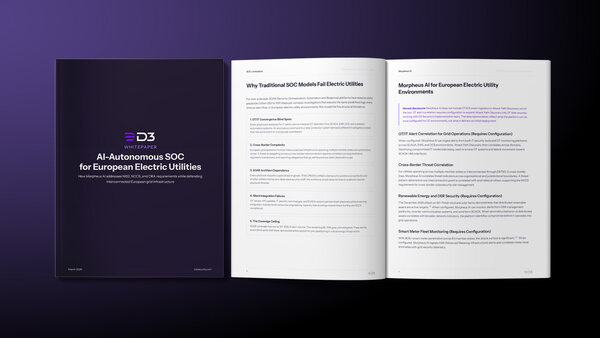
Executive Summary
European electricity infrastructure faces a convergence of escalating cyber threats and the most demanding regulatory framework in the sector’s history. NIS2 classifies energy as an essential sector with fines reaching €10 million or 2% of global turnover. The EU Network Code on Cybersecurity for Electricity (NCCS), the first sector-specific cyber regulation for any EU critical infrastructure, entered into force June 2024. The Cyber Resilience Act will mandate security for every connected device on the grid by 2027.[1][2][3]
The threat environment is not theoretical. In December 2025, coordinated cyber attacks hit 30+ wind and solar farms across Poland. These were attributed to Russia’s FSB.[4] Ukraine’s energy system lost 9 GW of generating capacity to combined physical and cyber-enabled attacks in 2024 alone.[5] ENISA recorded 200 energy sector incidents in 2024, making it the second most targeted sector.[6]
NIS2 introduces personal management liability for cybersecurity failures.[7] Board members and executives at energy companies face individual accountability for security decisions. Documented, auditable security operations are no longer optional.
This paper examines why European electric utilities must move beyond legacy SOAR to AI-autonomous security operations, how the regulatory landscape demands this transition, and what D3 Security’s Morpheus AI delivers in production.
incidents (ENISA 2024)
fines for essential
attacked (Poland Dec 2025)
Table of Contents
- The European Electric Utility Threat Landscape
- The European Regulatory Convergence
- Why Traditional SOC Models Fail Electric Utilities
- Morpheus AI for European Electric Utility Environments
- Electric Utility Use Cases
- How Morpheus AI Addresses European Regulatory Requirements
- Traditional SOAR vs. AI-Autonomous SOC for Cross-Border Operations
- Frequently Asked Questions
The European Electric Utility Threat Landscape
ENISA’s NIS360 2024 report identifies energy as the second most impacted sector, with DDoS attacks and ransomware as the dominant threat vectors.[8] Hacktivists are targeting OT systems with explicit intent to disrupt operations. The electricity subsector shows high maturity, but gas, district heating, and hydrogen subsectors lag significantly, creating uneven defense across Europe’s interconnected energy ecosystem.
State-Sponsored Attacks on European Energy
The December 2025 coordinated attack on 30+ Polish wind and solar farms (attributed to Russia’s FSB Center 16 unit, tracked as Static Tundra/Energetic Bear) was purely destructive in intent.[9] It disrupted communication between facilities and distribution system operators. In 2022, three separate cyberattacks hit German wind power production, including the Enercon incident where 5,800 turbines lost remote connectivity following the Viasat satellite link disruption.[10]
Ukraine: The Operational Blueprint
Ukraine’s energy system has suffered devastating combined kinetic and cyber-enabled attacks: 9 GW of generating capacity lost in 2024, 60% of gas production capacity destroyed, and 800,000 residents left without power from a single coordinated October 2025 attack.[11] Ukraine’s integration into the ENTSO-E synchronous grid means these attacks directly affect European energy security geopolitics. The pattern of combined physical and cyber operations targeting generation, transmission, and distribution simultaneously represents the threat model European grid operators must prepare for.
Cross-Border Interconnection Risk
The ENTSO-E synchronous grid serves over 400 million customers across 24 countries through 341 cross-border interconnection lines spanning 547,901 km.[15] A cyber incident at a single transmission system operator can cascade across synchronous zones. ENTSO-E itself was breached in 2020. The compromised systems were not connected to operational transmission networks, but the incident demonstrated the need for strict segmentation between administrative and operational infrastructure across the entire interconnected grid.
The Workforce Crisis
The EU faces a cybersecurity workforce gap of 274,000 positions (424,000 across broader Europe).[12] Two-thirds of organizations report understaffed security teams. Smaller utilities and renewable energy operators often have zero dedicated security staff, yet NIS2 extends obligations to all entities above the 50-employee or €10 million threshold.
The European Regulatory Convergence
European electric utilities now face simultaneous compliance obligations under multiple frameworks, each with distinct requirements, timelines, and enforcement mechanisms.
NIS2 Directive
NIS2 classifies electricity, gas, oil, heating/cooling, hydrogen, and EV charging as essential services with the highest cybersecurity obligations.[1] The transposition deadline passed October 2024, but 23 member states faced infringement proceedings by November 2024.
NIS2 Incident Reporting Timeline
| Stage | Deadline | Requirement |
|---|---|---|
| Early warning | 24 hours | Initial notification to CSIRT with preliminary assessment |
| Incident notification | 72 hours | Detailed report: severity, impact, indicators of compromise |
| Intermediate report | On request | Status updates on incident handling and recovery |
| Final report | 1 month | Root cause analysis, remediation, cross-border impact |
Management Liability
NIS2 Article 20 makes management bodies personally liable for approving cybersecurity risk-management measures.[13] For utility boards, documented and auditable evidence of decision-making is a personal legal requirement.
Network Code on Cybersecurity for Electricity (NCCS)
The NCCS (Commission Delegated Regulation EU 2024/1366) entered into force June 13, 2024. It is the first sector-specific cybersecurity regulation for any EU critical infrastructure.[2] It applies to entities whose digitalized processes have critical or high impact on cross-border electricity flows, including TSOs, DSOs, and nominated electricity market operators.
Key NCCS requirements: recurrent cybersecurity risk assessments (every 3 years), minimum and advanced security controls by entity impact level, cybersecurity certification of products and services, incident handling and crisis management protocols, cybersecurity exercise participation, structured information sharing with ENTSO-E and EU DSO Entity, and monitoring/benchmarking/reporting obligations.
EU Cyber Resilience Act (CRA)
The CRA entered into force December 10, 2024, with full application from December 11, 2027.[14] For electric utilities, CRA mandates lifecycle cybersecurity for every connected device on the grid: smart meters, inverters, SCADA components, DER controllers, and network management software. Manufacturers bear cybersecurity responsibility throughout product lifespan. Reporting obligations for actively exploited vulnerabilities begin September 2026.
Member State Implementation
Germany’s KRITIS Dachgesetz entered into force March 17, 2026, expanding scope from 2,000 to over 30,000 entities.[16] Energy companies are regulated through the EnWG (Energy Industry Act) and BNetzA Security Catalog. France’s ANSSI, with approximately 800 cybersecurity professionals, applies the LPM to operators of vital importance including energy, though NIS2 transposition remains in legislative process.[17] Multi-jurisdiction utilities face the complexity of complying with divergent national transpositions simultaneously.
Why Traditional SOC Models Fail Electric Utilities
For over a decade, SOAR (Security Orchestration, Automation and Response) platforms have relied on static playbooks (often 250 to 500 steps per complex investigation) that execute the same predefined logic every time an alert fires. In European electric utility environments, this model hits five structural limitations.
1. OT/IT Convergence Blind Spots
Static playbooks designed for IT alerts cannot interpret OT telemetry from SCADA, EMS, DCS, and substation automation systems. An anomalous command to a relay protection system demands different investigation context than the same event on a corporate workstation.
2. Cross-Border Complexity
European grid operators monitor interconnected infrastructure spanning multiple member states and synchronous zones. A threat propagating across a cross-border interconnection requires correlation across jurisdictions, regulatory frameworks, and reporting obligations that go well beyond any static playbook’s scope.
3. SOAR Architect Dependency
Every playbook requires a specialized engineer. With 274,000 unfilled cybersecurity positions across the EU and smaller utilities having zero dedicated security staff, the workforce simply does not exist to build and maintain playbook libraries.
4. Silent Integration Failures
OT vendor API updates, IT security tool changes, and SCADA system patches break playbooks without warning. Integration maintenance consumes engineering capacity that should go toward threat hunting and NCCS compliance.
5. The Coverage Ceiling
SOAR coverage tops out at 30–40% of alert volume. The remaining 60–70% goes uninvestigated. These are the exact blind spots that state-sponsored actors exploit for pre-positioning in critical energy infrastructure.
Morpheus AI for European Electric Utility Environments
OT/IT Alert Correlation for Grid Operations (Requires Configuration)
When configured, Morpheus AI can ingest alerts from both IT security tools and OT monitoring platforms across SCADA, EMS, and DCS environments. Attack Path Discovery then correlates across domains, identifying compromised IT credentials being used to access OT systems and lateral movement toward SCADA HMI interfaces.
Cross-Border Threat Correlation
For utilities operating across multiple member states or interconnected through ENTSO-E cross-border lines, Morpheus AI correlates threat indicators across organizational and jurisdictional boundaries. A threat pattern detected at one interconnection point is correlated with anomalies at others, supporting the NCCS requirement for cross-border cybersecurity risk management.
Renewable Energy and DER Security (Requires Configuration)
The December 2025 attack on 30+ Polish wind and solar farms demonstrates that distributed renewable assets are active targets.[9] When configured, Morpheus AI can monitor alerts from DER management platforms, inverter communication systems, and wind farm SCADA. When anomalous behavior at distributed assets correlates with broader network indicators, the platform identifies compromise before it cascades into grid operations.
Smart Meter Fleet Monitoring (Requires Configuration)
With 80%+ smart meter penetration across EU member states, the attack surface is significant.[18] When configured, Morpheus AI ingests AMI (Advanced Metering Infrastructure) alerts and correlates meter-level anomalies with grid security telemetry.
Report Writer for Regulatory Documentation
Once configured, Report Writer supports documentation for NIS2 incident reporting (24-hour, 72-hour, and 1-month timelines), NCCS compliance records, multi-jurisdiction CSIRT reporting, NIS2 Article 20 management audit trails, and KRITIS/BNetzA documentation.
Electric Utility Use Cases
State-Sponsored Grid Targeting
Morpheus AI correlates alerts from EDR, identity, NDR, and OT monitoring to identify state-sponsored threat patterns consistent with Energetic Bear/Static Tundra TTP. It surfaces behavioral anomalies (unusual SCADA access, atypical lateral movement, anomalous industrial protocols) that collectively indicate targeted grid operations.
SCADA/ICS Compromise Identification (Requires Configuration)
When attackers target SCADA systems, alerts generate across OT anomaly detection, network monitoring, and IT security tools. Morpheus AI correlates these into a unified attack narrative and recommends containment that balances security with grid stability.
Ransomware Kill Chain Interruption
Morpheus AI identifies ransomware kill chains by correlating alerts across email security, identity, EDR, NDR, and firewalls. It surfaces attack paths with containment recommendations before encryption disrupts grid systems.
Wind and Solar Farm Protection (Requires Configuration)
Following the 2025 Polish attack pattern, when configured, Morpheus AI monitors distributed renewable assets for communication disruption, SCADA anomalies, and unauthorized command injection, cross-correlating with grid-level telemetry to identify coordinated multi-site attacks.
Cross-Border Incident Coordination
For cross-border incidents, Morpheus AI produces investigation records supporting parallel CSIRT notification under NIS2 and NCCS. A unified dataset enables consistent reporting across jurisdictions with divergent requirements.
How Morpheus AI Addresses European Regulatory Requirements
| Regulatory Requirement | How Morpheus AI Helps |
|---|---|
| NIS2 24-hour early warning | Autonomous triage delivers L2-quality assessment in under 2 minutes for rapid severity determination |
| NIS2 72-hour notification | Attack Path Discovery produces comprehensive scope and impact analysis within the notification window |
| NIS2 1-month final report | Complete investigation records provide foundation for root cause analysis and cross-border impact assessment |
| NIS2 management liability | Auditable investigation records document oversight and decision-making for personal accountability compliance |
| NCCS risk assessments | Continuous monitoring across OT/IT stack supports recurrent risk assessment with real-time threat context |
| NCCS incident handling | Automated investigation workflows align with NCCS incident handling and crisis management protocols |
| NCCS cross-border reporting | East-West correlation across interconnection points supports cross-border information sharing requirements |
| CRA vulnerability reporting | Integration monitoring identifies actively exploited vulnerabilities in connected grid devices for mandatory reporting |
Traditional SOAR vs. AI-Autonomous SOC for Cross-Border Operations
| Capability | Traditional SOAR | AI-Autonomous SOC (Morpheus AI) |
|---|---|---|
| Alert coverage | 30–40% of alert volume; rest uninvestigated | 100% of alerts triaged with L2-quality investigation |
| OT/IT correlation | Separate playbooks per domain; no cross-domain reasoning | Correlates IT and OT alerts in single investigation (requires configuration) |
| Cross-border threat detection | No cross-jurisdiction correlation capability | East-West correlation across ENTSO-E interconnection points |
| Multi-jurisdiction reporting | Manual report generation per jurisdiction | Parallel reports from unified investigation dataset |
| NIS2 72-hour notification | Depends on analyst availability and manual investigation speed | L2-quality assessment in under 2 minutes |
| Management liability documentation | Inconsistent documentation; gaps in audit trail | Auditable investigation records for every alert and decision |
| Playbook maintenance | 250–500 steps per playbook; breaks on API changes | AI-generated investigation plans; self-healing integrations |
| Staffing requirement | Specialized SOAR engineers + full analyst team per jurisdiction | Smaller teams manage cross-border operations with AI augmentation |
Questions for Your Evaluation
Before evaluating any AI-autonomous SOC platform, including Morpheus AI, European electric utility security leaders should consider:
- NIS2 + NCCS readiness: Can your SOC support both the NIS2 24-hour early warning and NCCS incident handling requirements simultaneously? Do you have the investigation speed for the 72-hour notification deadline?
- Cross-border operations: If you operate across member states or synchronous zones, can your SOC correlate threats across jurisdictions? Can it generate parallel reports meeting divergent national requirements?
- Management liability exposure: What documentation exists to demonstrate management oversight of cybersecurity risk-management measures? Would it survive regulatory scrutiny under NIS2 Article 20?
- OT/IT coverage: What percentage of your OT alerts are investigated? Can your SOC correlate alerts across IT and SCADA/ICS domains in a single investigation?
- Renewable asset security: With the Poland attack precedent, how do you monitor distributed wind and solar assets for coordinated cyber operations? Does your SOC have visibility into DER SCADA communications?
- AI verification: Does the platform provide full code visibility for every automated decision? Can operators inspect and override AI-generated playbooks before actions affect grid operations?
Next Steps
- Schedule a technical demonstration tailored to your utility environment, including OT/IT integration and cross-border grid monitoring.
- Request a regulatory compliance mapping showing how Morpheus AI supports NIS2, NCCS, and CRA obligations for your specific jurisdictions.
- Review production metrics from energy sector deployments, including alert reduction, OT/IT correlation, and analyst hour recovery.
- Evaluate Report Writer configuration for multi-framework documentation across NIS2, NCCS, KRITIS/BNetzA, and national requirements.
- Assess cross-border capability for correlating threats across synchronous zones and generating jurisdiction-specific incident reports.
Frequently Asked Questions
What is NIS2 and how does it affect European electric utilities?
NIS2 (Directive 2022/2555) classifies electricity as an essential service, requiring compliance with the highest cybersecurity obligations. Fines reach €10 million or 2% of global annual turnover. Incident reporting requires 24-hour early warning, 72-hour detailed notification, and 1-month final report. Management bodies face personal liability for cybersecurity oversight.
What is NCCS and when did it take effect?
NCCS (Commission Delegated Regulation EU 2024/1366) is the first sector-specific cyber regulation for any EU critical infrastructure. It entered into force June 13, 2024. It applies to TSOs, DSOs, and electricity market operators, requiring recurrent risk assessments every 3 years, minimum and advanced security controls, and cross-border information sharing.
How does the Cyber Resilience Act (CRA) affect utilities?
CRA entered into force December 10, 2024, with full application by December 11, 2027. It mandates lifecycle cybersecurity for every connected grid device: smart meters, inverters, SCADA components, and DER controllers. Vulnerability reporting obligations begin September 2026.
What does NIS2 personal management liability mean?
NIS2 Article 20 makes management bodies personally liable for approving and overseeing cybersecurity risk-management measures. This is individual accountability—not just organizational fines. Board members need auditable documentation of security decisions and oversight.
How do utilities meet NIS2 72-hour notification deadlines?
NIS2 requires incident notification to CSIRTs within 72 hours with severity, scope, impact indicators, and initial investigation. Utilities need SOC capabilities that can deliver L2-quality investigation assessment in under 2 hours to support the reporting window with defensible analysis.
What is cross-border incident coordination?
Utilities operating across member states or connected through ENTSO-E cross-border lines must coordinate incident response across jurisdictions. This requires generating parallel reports that map to divergent national requirements from a single investigation. Different countries have different CSIRTs, authorities, and regulatory frameworks.
How are member states implementing NIS2 differently?
Germany’s KRITIS Dachgesetz expanded scope from 2,000 to 30,000+ entities. France applies the LPM to operators of vital importance. Poland has its own enforcement timeline. Multi-jurisdiction utilities must comply with divergent national transpositions simultaneously, creating compounding compliance burden.
What happened in the December 2025 Polish wind farm attack?
30+ wind and solar farms across Poland were hit in coordinated cyber attacks attributed to Russia’s FSB Center 16 unit. The attack disrupted communications between facilities and distribution system operators and was purely destructive in intent—not financial theft or espionage.
Footnotes
- Directive (EU) 2022/2555 (NIS2). Energy classified as essential sector. Transposition deadline October 17, 2024. European Commission opened infringement proceedings against 23 member states November 28, 2024.
- Commission Delegated Regulation (EU) 2024/1366, Network Code on Cybersecurity for Electricity (NCCS). Adopted March 11, 2024. Entry into force June 13, 2024. Applies to entities with critical/high impact on cross-border electricity flows.
- EU Cyber Resilience Act (CRA). Council adopted October 10, 2024. Entry into force December 10, 2024. Reporting obligations September 11, 2026. Full application December 11, 2027. Applies to IoT/OT devices including smart meters, inverters, SCADA components.
- CERT Polska, January 2026. December 29, 2025 coordinated attack on 30+ wind and solar farms in Poland. Attribution: Static Tundra (linked to Russia FSB Center 16). Objective: purely destructive.
- IEA/ACAPS analysis, 2024–2025. Ukraine energy attacks: 9 GW generating capacity lost in 2024. 60% gas production capacity destroyed. 800,000 residents without power from single October 2025 attack.
- ENISA NIS360 2024 Report, February 2025. Energy: second most impacted sector with 200 total incidents. Electricity subsector: high maturity. Gas subsector: moderate maturity.
- NIS2 Directive, Article 20. Management bodies of essential entities personally liable for cybersecurity risk-management measures and oversight of implementation.
- ENISA Threat Landscape 2024. Energy sector: 3.27% of recorded events. DDoS most common threat, ransomware second. Hacktivists targeting OT systems with intent to disrupt.
- Dragos analysis, 2022. Three separate cyberattacks on German wind power production. Enercon lost remote connection to 5,800 turbines following Viasat satellite link disruption coinciding with Russia’s invasion of Ukraine.
- NIS2 Directive, Article 34. Essential entities: fines up to €10M or 2% worldwide annual turnover, whichever is higher.
- ISC2, 2024. EU cybersecurity workforce gap: 274,000 positions. Broader Europe: 424,000. Germany alone: up to 106,000. Two-thirds of organizations report security teams understaffed.
- Electricity Directive 2019/944. Member states mandated 80% smart meter penetration by 2024. By end 2022, 13+ EU countries exceeded 80%.
- ENTSO-E synchronous grid: 8 zones, Continental Europe area serves 400M+ customers across 24 countries. 341 cross-border interconnection lines, 547,901 km circuit length.
- Germany KRITIS Dachgesetz entered into force March 17, 2026. Scope expands from 2,000 to 30,000+ entities. Energy companies regulated through EnWG and BNetzA Security Catalog.
- 1.ANSSI (France). Approximately 800 cybersecurity professionals. LPM applies to OIV including energy. NIS2 transposition bill adopted at first reading February 2025.