

Self-Healing Integrations
Your Integrations Fix Themselves.
Morpheus continuously monitors every connection across your security stack — detecting API drift, schema changes, and rotated credentials, then generates corrective code autonomously. No engineer required. No coverage gap. No 2 AM fire drill.
Why SOAR Failed
Broken Integrations Were SOAR’s Dirty Secret. They’re Still Yours.
SOAR didn’t fail because the idea was wrong. It failed because maintaining it became a full-time job. Every API update, every schema change, every rotated credential — another broken playbook, another fire drill for your engineers. SOC teams spend 30–40% of their time on integration maintenance alone. And the worst part: most broken integrations go undetected for 48 hours. That’s 48 hours of silent automation failure, queuing alerts, and gaps attackers can walk through.
Self-Healing Integrations eliminate this problem permanently.
800+ Integrations. All Self-Healing. All Continuously Monitored.
Every connection across your security stack — SIEM, EDR, IAM, cloud, email, NDR, DLP — monitored, maintained, and self-repaired automatically.















30–40%
Of SOAR admin time lost to integration maintenance
63%
Of SOC teams cite integration failures as their top automation reliability concern
48 hrs
Average time to detect a broken integration, even in monitored environments
800+
Analyst-hours recaptured per year in a 10-person SOC after deployment
Source: D3 Security, Integrations That Fix Themselves whitepaper
How Self-Healing Integrations Work
Detect. Diagnose. Repair. Before Anyone Notices.
Self-Healing Integrations aren’t a monitoring dashboard. They’re an autonomous repair engine — continuously watching every connection across your stack and acting before failures become gaps.
01. Continuous Monitoring
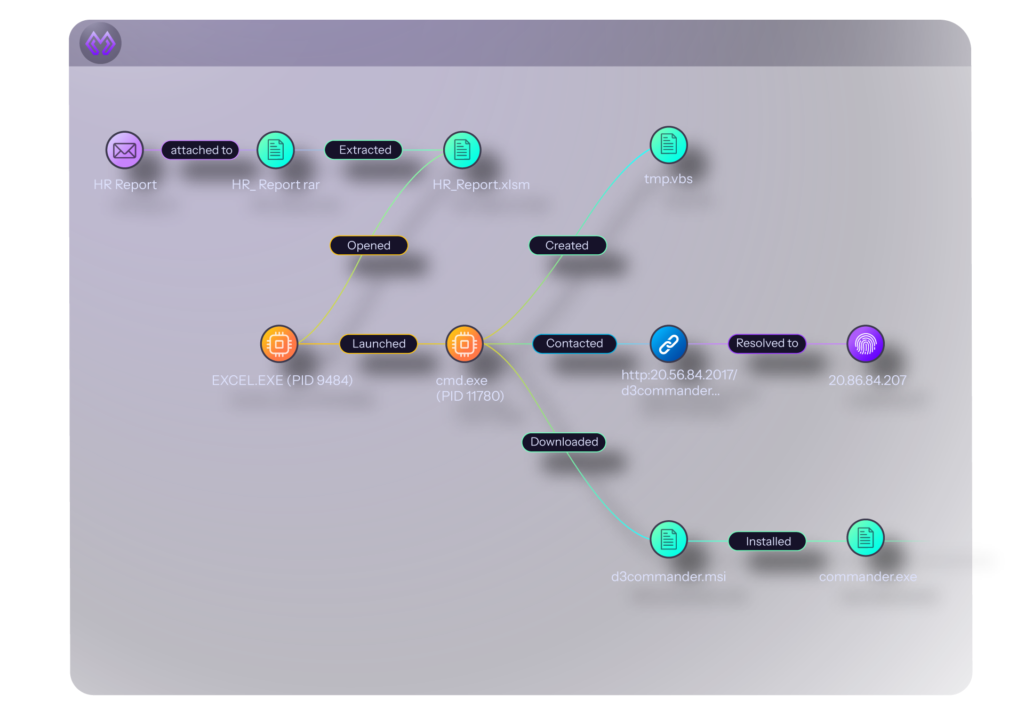
Morpheus monitors the health and behavior of every API integration in real time — watching for changes in endpoints, authentication schemas, response formats, and data structures. Not after the failure. Before it.
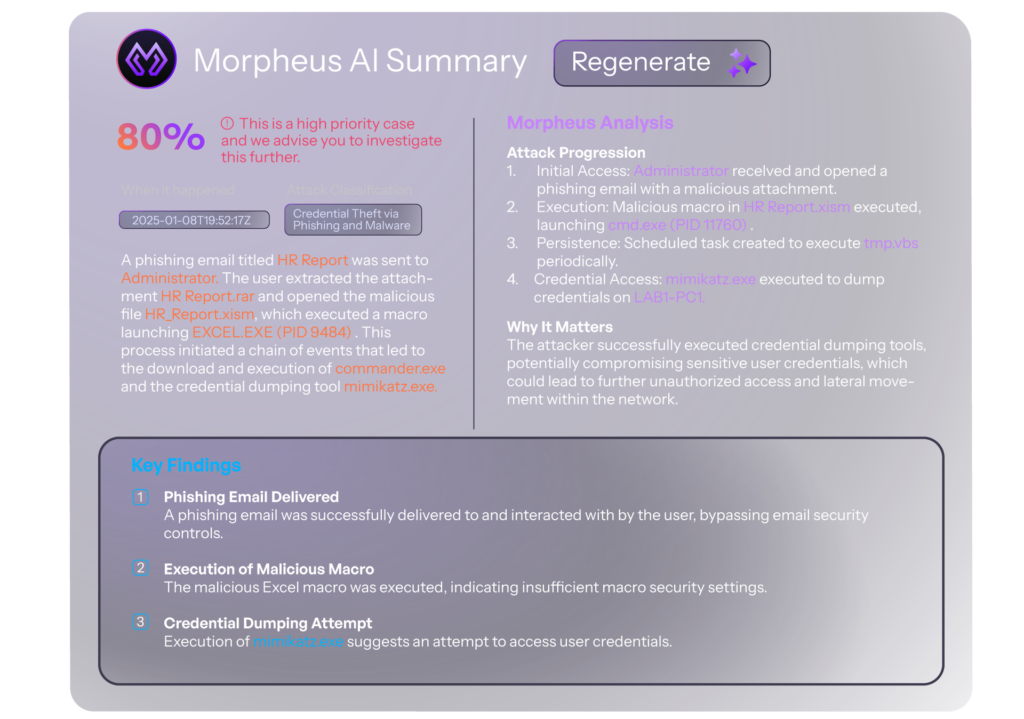
02. Autonomous Diagnosis
When drift is detected, Morpheus automatically maps what changed — new OAuth scope, updated endpoint path, altered response schema — and determines the corrective action required without human involvement.
03. Corrective Code Generation
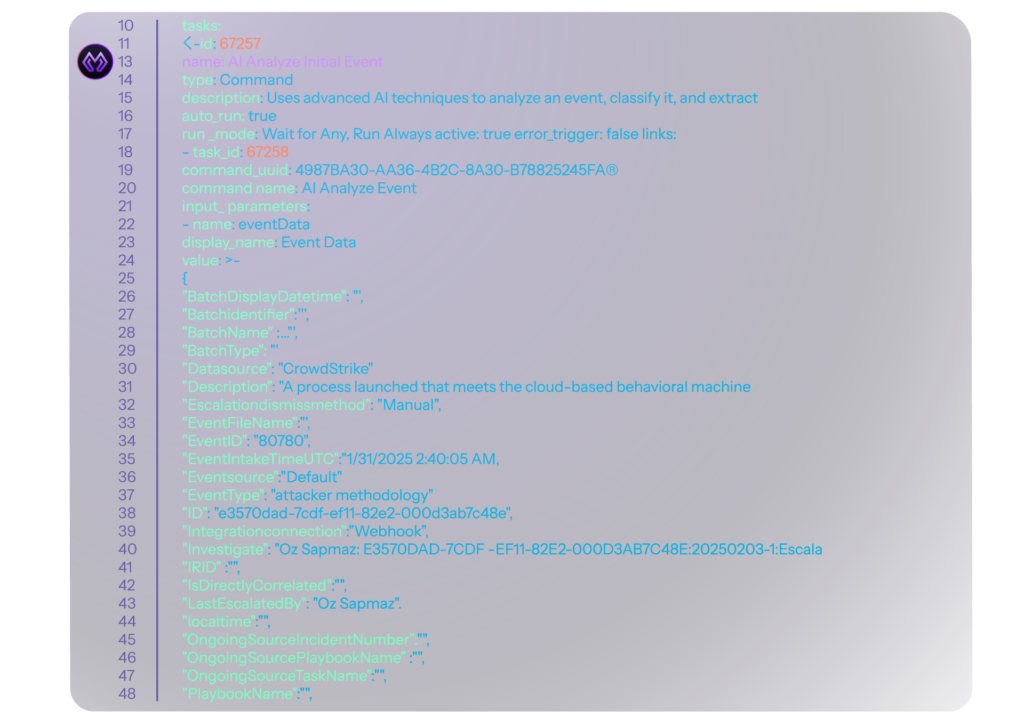
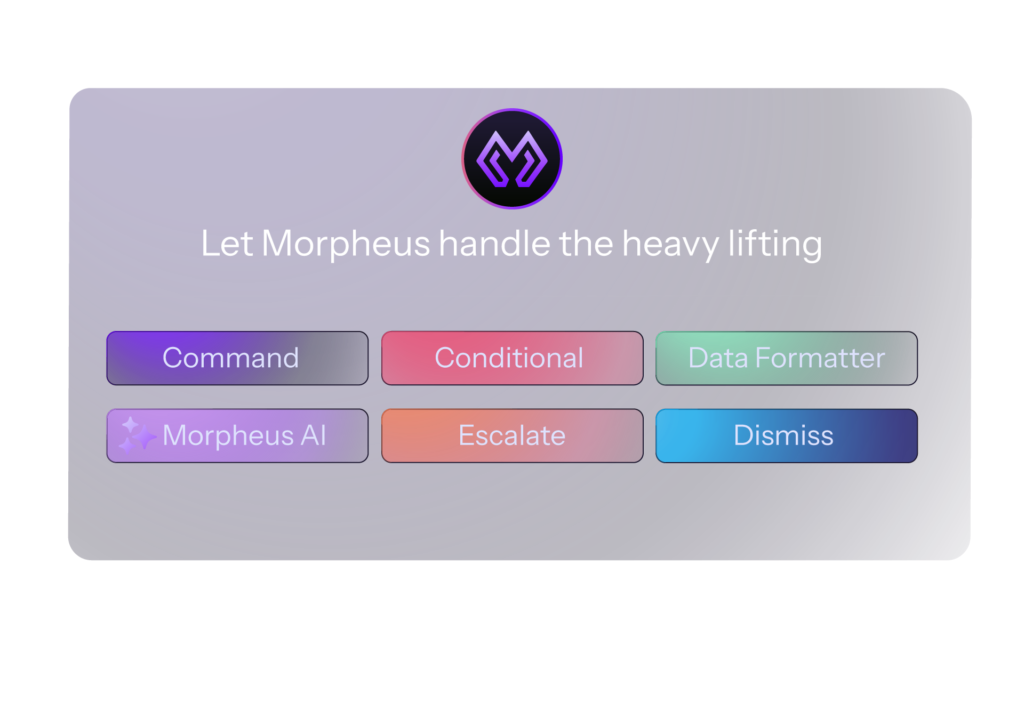
Morpheus generates and applies the corrective code autonomously, tests it against a sandbox, validates the alert ingestion pipeline, and restores full connectivity. No ticket. No engineer. No gap.
04. Zero Coverage Loss
Playbooks continue executing. Alerts continue flowing. Automation coverage never lapses. Your team wakes up to a clean queue — not a backlog caused by a Friday afternoon API push they didn’t know about.
The Silent Failure Problem
A Broken Integration Doesn’t Announce Itself. That’s the Problem.
When a SOAR integration breaks, it doesn’t announce itself. Alerts queue. Enrichment returns empty. Containment actions don’t fire. And the average enterprise takes 48 hours to notice — 48 hours an attacker can use.
The Engineering Time You Get Back
40% of Your SOC Engineering Time. Returned.
Integration maintenance is one of the largest hidden costs in SOAR — often exceeding the platform license in engineering hours. Self-Healing Integrations eliminate that cost structurally. A 10-person SOC recaptures 800+ analyst-hours per year. Engineers stop fixing connectors. They start hunting threats.
70%
reduction in integration-related analyst escalations within 90 days
3.2×
faster mean time to repair vs. manual connector triage
40%
of SOAR admin time recaptured and redirected to threat hunting
The Capability No One Else Has
Every Other Security Automation Platform Leaves This Problem Unsolved.
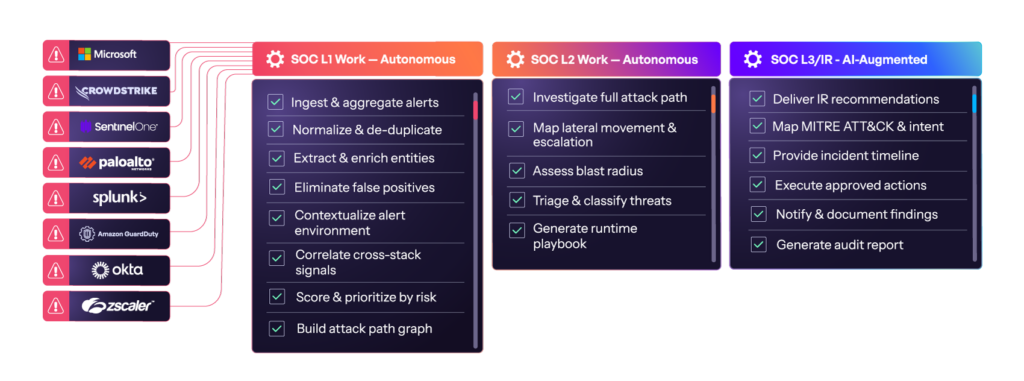
Legacy SOAR, AI SOC tools, and workflow builders all require manual intervention when integrations break. None of them detect API drift and generate corrective code autonomously. Morpheus is the only security automation platform that does — and that advantage compounds every time a vendor pushes an update.
Built for MSSP Scale
50 Clients. Around 20 Connectors Each. All Self-Healing.
A single vendor API change can break integrations across dozens of MSSP client tenants simultaneously. Morpheus applies corrective code across all affected tenants automatically — one fix, every client, zero service degradation. The maintenance burden that scales with every new SOAR client simply doesn’t exist.
AI YOUR SOC ✨
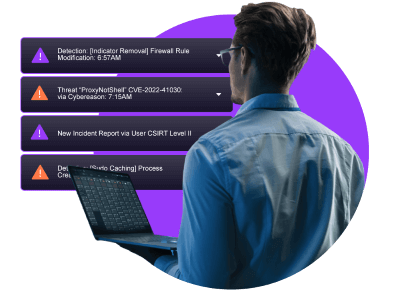
Every alert. Fully investigated. In under 2 minutes.
Learn More About Self-Healing Integrations
Check out these resources on the integration maintenance problem and how Morpheus eliminates it.
-
6 Minutes and a Prayer: The Math That Proves Your SOC Is Gambling with Every Alert
This whitepaper presents a math-driven analysis that exposes an inconvenient truth hiding in plain sight across the cybersecurity industry.
-
Autonomous Investigation Compared: D3 Morpheus AI vs. Microsoft Security Copilot
We tested D3 Morpheus AI against Microsoft Security Copilot across three real attack scenarios. Morpheus found root cause in all three. Copilot found it in none. Read the full results.

-
Blending Deterministic Workflows with AI: Architecting the Enterprise and MSSP SOC of the Future
A blueprint for autonomy you can control. Learn how to blend deterministic precision with cognitive scale to autonomously triage 95% of alerts.
Common Questions
Self-Healing Integrations — Explained.
What are self-healing integrations?
Self-healing integrations are Morpheus’s proprietary autonomous connector maintenance capability — continuously monitoring every API integration across your security stack, detecting drift when vendors push updates, and generating corrective code without human intervention. When a vendor changes an API endpoint, rotates authentication credentials, or alters a response schema, Morpheus detects the change, diagnoses what broke, generates the fix, and restores full connectivity — before any alert goes uninvestigated.
Why do SOAR integrations break so often?
SOAR platforms treat integrations as static configurations. The security tool landscape is anything but static — vendors push API updates, rotate credentials, and alter schemas continuously. Every change is a potential break. SOC teams spend 30–40% of their engineering time maintaining these connections, and the average enterprise takes 48 hours to even detect a broken integration. Self-healing integrations change the architecture so the connector adapts when the world changes around it.
Does any other security automation platform offer self-healing integrations?
No. Legacy SOAR platforms, AI SOC tools, and workflow builders all require manual intervention when integrations break. Some offer error handling and retry logic, which improves on silent failures — but API schema changes and authentication updates still require human diagnosis and repair. Morpheus is the only security automation platform that autonomously detects drift and generates corrective code without human involvement.
How quickly does Morpheus detect and repair a broken integration?
Morpheus detects integration drift in real time — typically within minutes of a vendor pushing an update. Compared to the industry average of 48 hours to even detect a broken integration manually, the operational difference is significant.
How does this benefit MSSPs specifically?
For MSSPs, a single vendor API change can break integrations across dozens of client tenants simultaneously. Morpheus applies corrective code across all affected tenants automatically — one fix, every client, zero service degradation. The integration maintenance burden that scales with every new SOAR client simply doesn’t exist in Morpheus.
What types of integration failures does Morpheus self-heal?
Morpheus detects and repairs API endpoint changes, authentication schema updates, OAuth scope modifications, response format alterations, and data structure changes. Any drift that would cause a traditional SOAR connector to fail silently is caught and corrected autonomously.
Your Engineers Should Be Hunting Threats. Not Fixing Connectors.
Give Morpheus the integrations. Get back the engineering time.
Your data. Your stack. Your results. No slideshow.